How to choose a swimwear manufacturer is a decision that dictates your product’s performance and margin. Selecting a factory without proven expertise in stretch fabrics and chlorine resistance leads to costly defects, from poor fit and fabric sag to colorfastness failures, directly impacting returns and brand reputation.
This analysis provides a framework for vetting potential partners. We evaluate critical data points from their MOQ structure and lead times to their fabric capabilities, including documented chlorine resistance and UPF 50+ ratings, ensuring you select a manufacturer aligned with your quality standards and business model.
Define Your Swimwear Product Requirements
A detailed product brief is non-negotiable. It prevents costly errors by telling a factory exactly what to build, for whom, and to what standard.
Establish Core Product Foundations
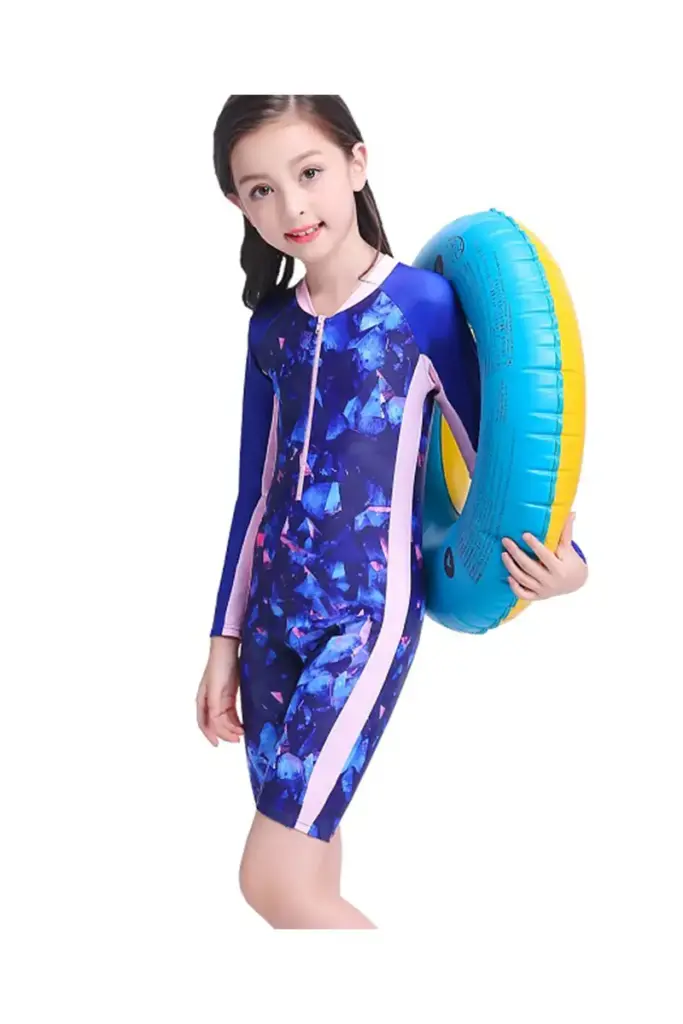
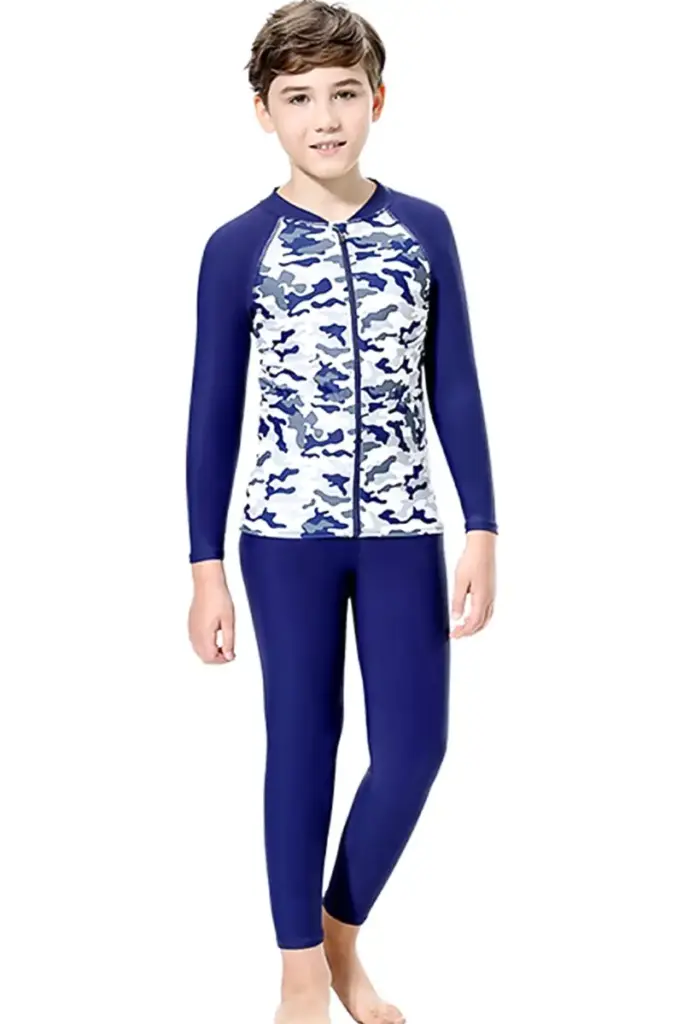
First, you need to define who will wear the Badebekleidung and how they will use it. A recreational suit prioritizes comfort and style for sun and pool exposure. A training suit needs high chlorine resistance and stretch recovery for frequent use. Children’s swimwear adds another layer, requiring specific safety checks for things like restricted substances and hardware durability.
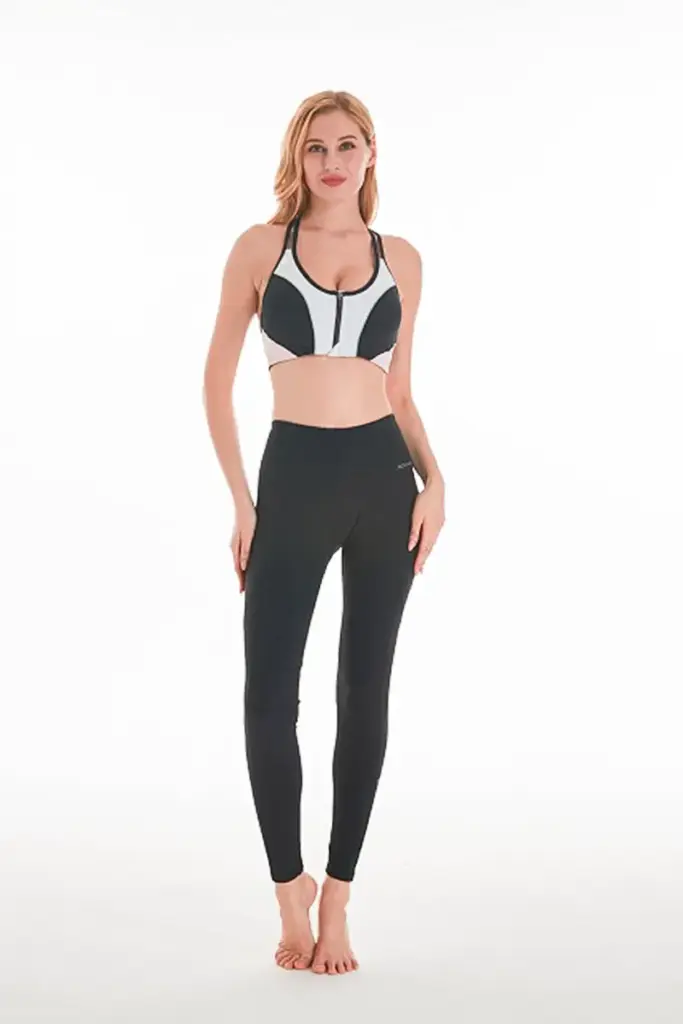
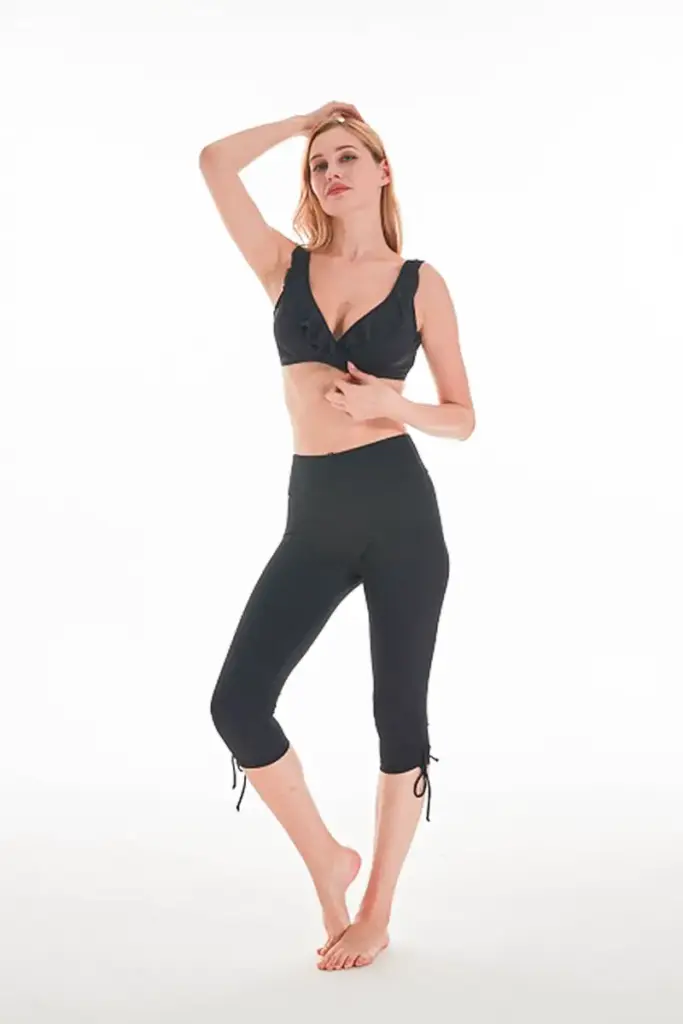
Next, specify the exact product category and silhouette. A one-piece, a bikini, a jammer, or a rash guard each requires different patterns, support structures, and lining. A clear definition helps the factory nail the fit, seam layout, and how the sizing will grade up and down.
Your choice of fabric is critical. Most swimwear uses a nylon/spandex blend, often around 80% nylon and 20% spandex, for its 4-way stretch. If you plan to use special fibers like recycled nylon, you must specify this upfront, as it changes the cost, hand-feel, and performance.
Finally, outline the intended fit and sizing. Is it a tight compression fit for competitive swimming or a more relaxed, body-hugging fit for fashion? Provide the factory with target body measurements for your size range. Swimwear sizing can’t be based on flat garment dimensions alone; it must account for the fabric’s stretch and recovery properties.
Specify Technical Performance and Compliance Standards
You have to set measurable performance targets. A factory can’t guess what “good quality” means. Be specific.
- Stretch Recovery: Define how well the fabric must snap back into shape after being stretched.
- Chlorine Resistance: For pool wear, specify minimum performance requirements, such as a grade 4 rating for colorfastness in chlorinated water.
- Wet Opacity: State that the fabric, especially in light colors, must not become see-through when wet.
- UV Protection: If you’re making sun-protective swimwear, require a specific rating, like UPF 50+.
Color performance is a common point of failure. Your product brief should list clear colorfastness requirements for exposure to common conditions.
- Light (sun exposure)
- Water (both salt and fresh)
- Sweat
- Chlorinated pool water
Every market has its own safety rules. You must identify all regulatory needs for your target sales region.
- Labeling: Specify requirements for fiber content, country of origin, and care instructions.
- Restricted Substances: For children’s products, this includes checks for lead and phthalates. For Europe, you need to consider REACH compliance. For the US, it’s often CPSIA.
- Hardware Durability: All clasps, rings, and sliders must be secure and resistant to corrosion from salt and chlorine.
Lastly, detail every construction and decorative element. Each one adds cost and potential compliance hurdles.
- Seams: Specify stitch types that can handle high stretch without breaking.
- Lining: Define the coverage area (e.g., front-lined or fully-lined) and material.
- Components: List any removable pads, cups, or underwires.
- Trims & Prints: Detail all decorative trims, logos, or printed patterns, including their placement and durability requirements.
Decide Between OEM, ODM, or Private Label
Your manufacturing model is a trade-off. You’re balancing design control and uniqueness against speed to market, minimum order quantity (Mindestbestellmenge), and upfront investment.
Understanding the Core Models and Their Trade-offs
Choosing your production path determines who owns the design, how much you can customize, and what your initial costs and risks look like. It’s the first major strategic decision you’ll make with a swimwear factory.
- OEM (Original Equipment Manufacturer): This is the full-custom route. You provide the factory with a complete tech pack—designs, patterns, fabric specs, and grading. The factory just builds what you tell them to. You own 100% of the intellectual property, which is perfect for creating a unique, differentiated brand. This path requires the most upfront investment in design and development, has the highest MOQs (often 300-500+ pieces per style), and takes the longest to get to market.
- ODM (Original Design Manufacturer): This is a middle ground. The factory has a catalog of pre-designed swimwear styles that work. You select a base design and customize elements like color, prints, and fabrics. The factory owns the base pattern, so other brands might use a similar silhouette. It’s a faster and cheaper way to launch than OEM, offering a balance between speed and moderate brand differentiation. MOQs are typically lower, around 200-300 pieces.
- Private Label: This is the fastest and lowest-risk option. You buy ready-made swimwear directly from the factory’s inventory and just add your own branding—labels, Tags, und Verpackung. There are minimal to no design changes. The trade-off is that your product will likely be identical to what other brands are selling. This model is ideal for market testing with very low MOQs, often 50-100 pieces per style.
Choosing a Model Based on Your Brand’s Stage and Goals
The right model depends entirely on your resources, timeline, and what you’re trying to achieve in the market. A new startup has very different needs than an established performance brand.
A few direct questions can point you in the right direction:
- Do you have a finished swimwear tech pack? If yes, you’re ready for OEM. If no, ODM or Private Label is your starting point.
- What’s your priority—uniqueness, Geschwindigkeit, or low risk? For total uniqueness, choose OEM. For speed with some customization, go with ODM. For the fastest market entry with minimal risk, Private Label is the clear choice.
- What is your budget and MOQ tolerance? If you can handle 300-500 pieces per style and higher development costs, OEM is viable. If you need to stay in the 50-100 piece range with minimal upfront spending, start with Private Label.
A common path for direct-to-consumer startups is to launch with Private Label or ODM to test the market and validate which styles and prints sell. Once you have clear best-sellers, you can invest in OEM development for those specific styles to gain exclusivity, improve the fit, and protect your brand equity.
For a performance or athletic swimwear brand, OEM is almost always the required path. Technical requirements for drag reduction, compression, and chlorine resistance demand full control over patterns and materials. In contrast, a large retailer entering the swim category might use Private Label to quickly launch a low-risk, branded line and gather sales data before committing to custom development.
Launch Faster with Low-Risk Swimwear Manufacturing.
Evaluate Swimwear Manufacturing Experience
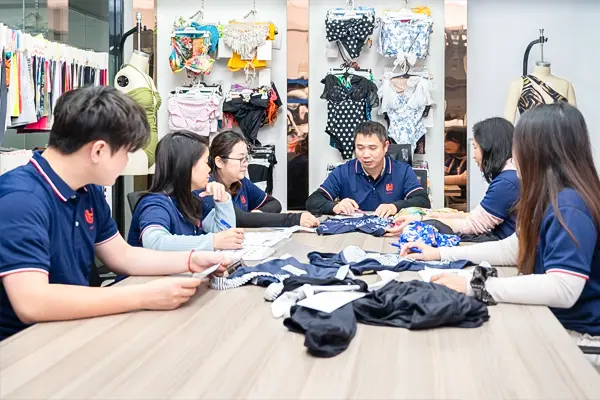
Specialized swimwear experience isn’t about general apparel. It’s proven by deep knowledge of stretch fabrics, complex seams, and verifiable performance testing for fit, Haltbarkeit, and colorfastness.
Key Markers of Specialized Swimwear Experience
Swimwear-specific experience is one of the best predictors of quality. A general apparel factory often fails because swimwear requires unique skills with high-stretch materials, precise seam construction, and extreme fit sensitivity. You need a partner who lives and breathes this category.
- The factory’s main business should be swimwear. This focus ensures they have mastered the challenges of high-stretch fabrics and the complex seam work needed to make a suit that performs and lasts.
- The team must have deep knowledge of performance materials. They should talk confidently about nylon/spandex blends, recycled polyamides, and the right linings for different styles and opacity needs.
- A strong partner provides detailed, actionable feedback during sampling. They should offer specific suggestions to improve fit, material recovery, and construction, not just ask for your approval.
- They must show evidence of performance testing. This includes internal or third-party reports for colorfastness, chlorine resistance, seam strength, and UV stability. No data means no proof.
How to Verify a Manufacturer’s Expertise
Claims are cheap. You need to verify a factory’s expertise before committing to a bulk order. The process is straightforward and separates the pros from the pretenders.
- Review their client list and ask for references from brands with similar quality standards. A factory proud of its work will have no problem connecting you with past clients.
- Request lab reports or internal QC records. Ask for specific results on fabric stress tests, elasticity retention after stretching, and colorfastness tests for chlorine and UV exposure.
- Order samples. Get both existing styles and a custom proto sample based on your design. Inspect the stitch quality, seam durability, and fit accuracy with your own hands.
- Watch for red flags. A factory that dismisses your fit concerns as “normal” or provides generic feedback that ignores swimwear’s unique challenges is a major liability.
Review Fabric & Material Capabilities
A supplier’s real capability is proven by their ability to provide fabrics with documented performance data for stretch, chlorine resistance, UPF rating, and colorfastness.
Verify Technical Performance and Durability
When you’re evaluating a swimwear manufacturer, the technical specs of their fabrics are non-negotiable. Your product’s lifespan and your brand’s reputation depend on it. Don’t just take their word for it; you need to see the test reports. A qualified supplier should provide fabrics that consistently meet a few core functional standards.
- 4-Way Stretch & High Recovery: The fabric has to stretch in all directions and, more importantly, snap back. Without high recovery, suits will bag and sag after a few wears, besonders wenn es nass ist. Look for at least 18-20% elastane/spandex content and ask for recovery rate data.
- Chlorine & Saltwater Resistance: Pool chemicals and saltwater destroy fabrics. A standard nylon/spandex might last 100 Std., but a good polyester/PBT blend for training suits can handle 200-800+ Std.. The factory must provide chlorine-hour ratings for their materials.
- UV Protection (UPF): For any suit meant for the outdoors, a UPF 50+ rating is the industry benchmark. This isn’t a marketing claim; it requires certified testing.
- Durability: This covers everything from pilling and abrasion resistance (from sand and pool decks) to ensuring the fabric doesn’t become transparent when wet. A common shell fabric weight is around 180–250 GSM for good coverage.
This verification extends to all components. The lining, power mesh for support, and elastics must all be swimwear-grade. Using standard lingerie elastic is a common mistake that leads to degradation and loss of fit. Insist that the entire material stack—shell, lining, and trims—is tested for durability in swim conditions.
Assess Fabric Library and Aesthetic Options
Beyond raw performance, a manufacturer’s fabric library shows their understanding of market trends and brand needs. You are looking for a partner who can deliver on both technical specs and the right look and feel. Get your hands on their fabric swatches to evaluate handfeel—a soft, luxurious nylon blend feels very different from a firmer, more durable polyester blend.
Your assessment should also cover their aesthetic capabilities. Can they produce vibrant, custom prints that won’t fade after a week in the sun? Their printing and dyeing processes must be optimized for synthetic swimwear fabrics, not generic textiles. Ask for colorfastness test results for pool water, seawater, and light exposure. This is especially important for bright and dark colors, which are prone to fading and bleeding.
Finally, check their range of special finishes. Options like ribbed, embossed, matte, or shiny textures can differentiate your product line. A good supplier will have these options available and, critically, will have already tested them for performance in water. If they offer sustainable options like recycled nylon (ECONYL) or polyester, confirm they can provide GRS certifications and that the performance matches their conventional fabrics.
Check Sampling Process and Development Support
A weak sampling process is a direct path to costly fit issues and production delays. Vet their development support and approval checkpoints before you commit to bulk orders.
Key Stages in the Swimwear Sampling Workflow
The sampling process reveals a manufacturer’s technical skill and attention to detail. It’s not just about getting a physical product; it’s about testing their ability to execute your vision. Here’s what a solid swimwear sampling process looks like.
- The process kicks off when a manufacturer gets a complete tech pack. This isn’t optional. It must include detailed design drawings, measurement specs, fabric choices, and construction notes.
- A standard workflow moves through several sample stages. Expect to see a proto sample, fit sample, a size set to check grading, photo samples for marketing, and a final pre-production sample for approval.
- For new swimwear brands or complex designs, plan on one to three rounds of sampling. This is normal for refining the fit, construction, and feel before committing to a full production run.
- Swimwear sampling is unique. It absolutely must verify fabric performance like stretch and recovery, opacity when wet, and durability against sun, salt, and chlorine. If they aren’t checking these, it’s a huge red flag.
- Your partner should have clear checkpoints for feedback and revisions. The process must end with a final, written approval from you before they are authorized to start bulk production.
Evaluating a Manufacturer’s Technical Support
Good manufacturers build your product. Great ones help you perfect it. The quality of their development support directly impacts your final garment and your budget. Here’s how to tell the difference.
- Real development support includes pattern creation, fit expertise for body-hugging garments, and an iterative revision process. They should be able to translate your feedback into concrete pattern adjustments.
- A skilled partner knows swimwear construction. They’ll use the right stitches, like flatlock or coverstitch seams, in high-stretch areas to ensure seams stretch with the fabric instead of breaking under tension.
- Ask if they can advise on or source swimwear-grade materials. This includes the main fabric but also appropriate linings, chlorine-resistant elastics, and corrosion-proof trims.
- Check their portfolio for recent experience producing swimwear similar to yours. A factory that makes performance jammers might not be the best fit for a delicate, strappy bikini, and vice versa.
- Weak development support is easy to spot. It shows up as vague feedback, an inability to solve fit issues, or the absence of a clear revision process. This isn’t just frustrating; it leads to expensive mistakes in bulk.
Understand MOQ and Pricing Structure
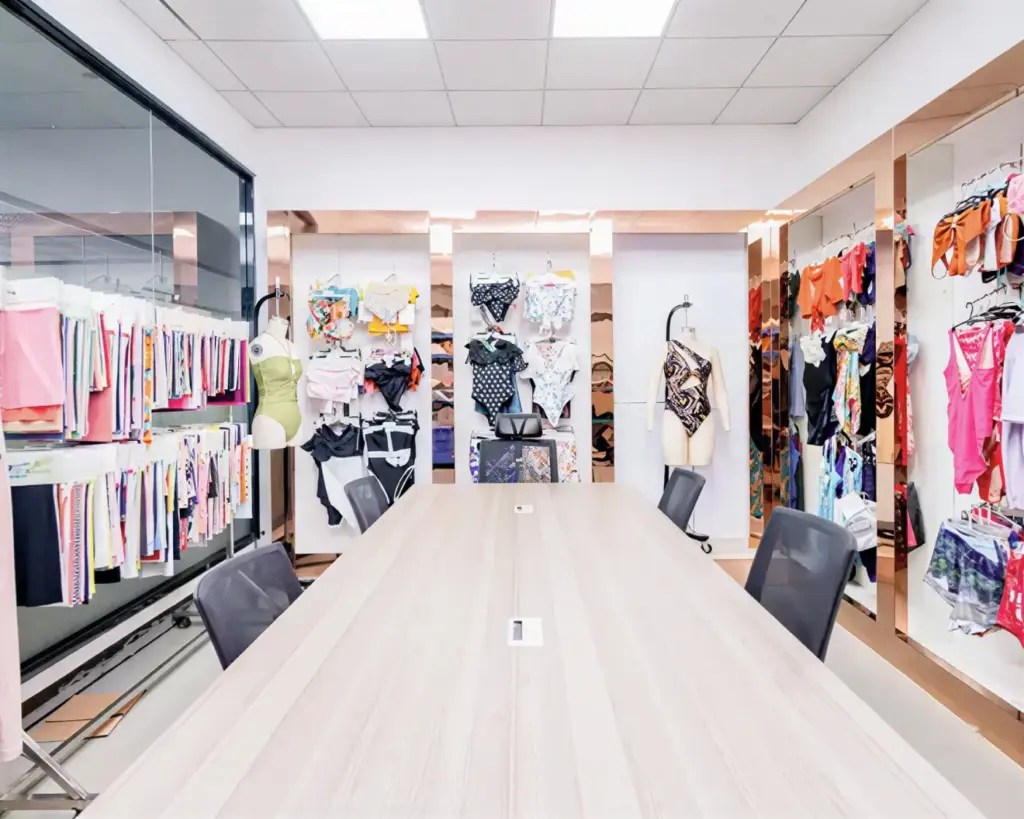
MOQ is a trade-off. Lower quantities reduce your risk but raise unit costs. Higher quantities improve your margins but demand more upfront capital and inventory commitment.
Breaking Down MOQ: Stil, Color, and Size Minimums
Minimum Order Quantity (Mindestbestellmenge) isn’t a single number. It’s a nested structure designed to make production runs economically viable for the factory. A manufacturer’s overall MOQ is driven by the minimums they must meet at each stage of the supply chain, especially from fabric mills.
Factories break down their MOQs into several levels. You have to satisfy each one.
- Fabric MOQ: This is the root of all other minimums. Fabric mills require a minimum purchase, often 500 to 1,000 meters per custom color or print. A factory must order this much fabric, so they need enough garment orders to use it up.
- Style MOQ: This is the minimum number of units for a single design, like a specific bikini top or one-piece. For many small to medium factories, this is typically 100 to 300 pieces.
- Color MOQ: Within a style, there’s a minimum per colorway. If your Style MOQ is 300 units, the factory might require you to order at least 50 to 100 pieces per color.
- Size MOQ: This is the final layer. For each color, you’ll need to order a minimum number per size, commonly 20 to 50 pieces. This ensures the cutting and grading process is efficient.
How Order Quantity Dictates Your Unit Cost
Your unit cost is a direct result of your order quantity. The relationship is simple: as your order volume goes up, your price per piece goes down. This is due to economies of scale. Every production run has fixed costs—pattern making, grading, fabric printing, and production line setup. Spreading these costs across 500 units is much more efficient than spreading them across 50.
Manufacturers use tiered pricing to reflect this. As you cross certain quantity thresholds, the price drops. While every factory is different, the price bands generally follow a clear pattern:
- Niedrige Mindestbestellmenge (50–100 units): Expect the highest prices, often $20–$30+ per piece. You’re paying a premium for the flexibility and low risk, as the factory absorbs high setup costs over a small run.
- Standard MOQ (200–300 units): This is often the sweet spot for emerging brands. The unit cost becomes more reasonable, typically falling into the $9–$20 range. Most factories build their standard pricing around this volume.
- High Volume (500–1,000+ units): At this level, you gain significant pricing power. Unit costs can drop to the $6–$15 range for simpler styles. This volume is necessary for wholesale strategies and achieving better profit margins.
The final price within these bands still depends on factors like fabric quality (recycled nylon costs more), construction complexity (reversible suits are more labor-intensive), and custom hardware.
Assess Quality Control Procedures
Swimwear QC isn’t just about looks. It’s about verifying chlorine resistance, stretch recovery, and consistent fit before a single suit ships. Look for documented processes, not just promises.
Evaluate Pre-Production and In-Line Controls
Quality is built in, not inspected at the end. A serious swimwear factory has controls in place before and during production to prevent bulk defects. If they can’t show you these, you’re taking a huge risk on fit and durability.
- Check for documented fabric and trim inspections. The factory must inspect materials *before* they hit the cutting table. Ask to see their inspection reports for fabric defects (using a 4-point system is a good sign) and verification that trims match your specs.
- Confirm pre-production lab tests. Make them show you lab reports for fabric performance. Key tests for swimwear are colorfastness (to chlorine, salt, and light), chlorine resistance, and stretch recovery. No tests mean no performance guarantee.
- Assess in-line sewing checks. QC inspectors should be on the production line. You need to know they’re checking for seam strength and consistent elastic application. Uneven elastic tension is a primary cause of poor fit and returns.
Review Final Inspection and System Documentation
The final audit is your last line of defense. This is where the factory proves the finished goods meet the standards you agreed on. A haphazard final check will lead to customer complaints and damaged brand reputation.
- Ask about the final inspection standard used. A professional factory uses a system like AQL 2.5 to randomly sample the batch and audit for defects. If they can’t name their standard, they probably don’t have one.
- Verify final garments undergo performance tests. Finished products should be checked for critical functions. This includes live fit tests on mannequins or models, stretch recovery checks on straps, and wet opacity tests on light-colored suits.
- Request to see QA manuals or QC checklists. This is the easiest way to spot an amateur. Ask to review their Quality Assurance manual or the actual checklists their inspectors use. If they don’t have documented procedures, they don’t have a real system.
Verify Certifications and Compliance
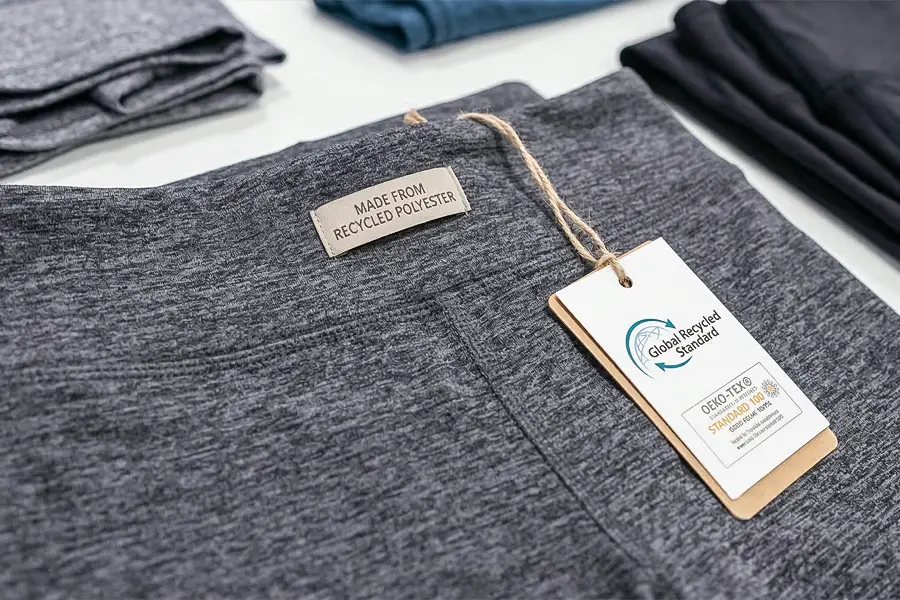
Treat certifications as evidence, not marketing. Demand actual documents, verify their scope and expiry dates, and use traceability records to connect claims to your specific production run.
Prioritizing Key Swimwear Certifications
Not all certifications carry the same weight. Focus your verification on the ones that directly address product safety, material claims, and ethical production for your specific market.
- Start with product safety. Get OEKO-TEX® Standard 100 certificates, which test textiles that touch the skin for harmful substances.
- Validate recycled content claims with Global Recycled Standard (GRS) certificates. They prove the chain-of-custody for materials like nylon and polyester.
- Request social compliance audit reports like BSCI, WRAP, or SA8000. These documents are your window into labor conditions and factory ethics.
- Confirm chemical safety for the EU market by ensuring all fabrics, prints, and trims align with REACH regulations.
- Check for factory-level systems with ISO 9001 for quality management and ISO 14001 for environmental management.
- For children’s swimwear, confirm compliance with specific safety rules, such as CPSIA in the US and EN 14682 for cords in the EU.
Authenticating Claims and Documentation
A certificate is just a piece of paper until you verify it. Your job is to connect that paper to the actual product you’re buying. Anything less is just taking a supplier’s marketing at face value.
- Treat certifications as proof, not marketing. Demand the actual document with its issuing body, scope, and validity dates.
- Ensure the certificate’s scope matches the exact factory, production process, and swimwear materials you are using. A certificate for a different facility is worthless.
- For GRS claims, ask for Transaction Certificates (TCs). This is the only way to connect the recycled material to your specific production lot.
- Validate a certificate’s authenticity. Check its number in the certifier’s public directory and confirm the expiry date.
- Watch for red flags: expired certificates, vague “compliant” language without test reports, or documents that don’t match the supplier’s name or address.
- Collect a core document set for approval. This includes test reports, material declarations, and traceability records, not just the top-level certificates.
Compare Lead Time and Production Capacity
A factory’s lead time (4–12 weeks) and monthly capacity (25k–60k units) dictate your launch speed and ability to scale. Verifying both is non-negotiable for seasonal swimwear.
Lead time and production capacity are the two variables that determine if you can get your swimwear to market on time and restock it reliably. One tells you how fast a factory works; the other tells you how much it can handle. For a seasonal product like swimwear, getting this wrong means missing your sales window entirely.
Core Evaluation Framework
When you’re assessing a swimwear factory, you need a clear framework. It boils down to comparing their speed, reliability, and scale. Focus your evaluation on these four points.
- Quoted Standard Lead Time: Look at their typical window from sample approval to ready-to-ship goods. Fast specialists often hit 4-8 weeks, but complex or fully custom programs can easily take 10-14 weeks.
- Sampling Speed and Reliability: How fast can they turn around a sample? Aim for 2-4 weeks. Also find out how many rounds it usually takes to get a new style approved. Delays here will push back your entire production calendar.
- Monatliche Produktionskapazität: Match your peak order volume against their stated capacity. If you forecast needing 15,000 units per month, a factory with a 60,000-unit capacity can handle your volume without stress.
- Capacity Allocation Policy: Ask if they reserve production lines for key partners. You need to know if your smaller orders will be pushed to the back of the line during the August-December peak season when everyone is producing for summer.
Key Questions to Ask Manufacturers
Get straight to the point with potential partners. Vague answers on timing or capacity are major red flags. Here are the questions you need to ask to get a clear picture of their operational fitness.
- What is your standard production lead time for swimwear, from final sample approval to goods being ready to ship?
- How does that lead time change if we use your stock fabrics versus a fully custom fabric or print?
- What is your total monthly capacity for swimwear units, and what is your current utilization rate?
- What is the largest single order you can produce without extending your standard lead time?
- Do you offer reserved production capacity for brands with recurring seasonal orders?
- Can you provide a timeline breakdown for orders of 100, 500, Und 1,000 pieces?
- Do you offer express production at a premium? What are the limitations?
- Will you confirm lead-time commitments in writing? What happens if you miss a deadline?
Evaluate Communication and Project Management
A manufacturer’s communication discipline directly predicts your risk of delays, fit problems, and cost overruns. Vet their systems before committing money or time to a project.
Assess Core Communication Practices
When you’re producing swimwear, communication isn’t just about exchanging information—it’s a live test of a factory’s competence. Slow, vague, or disorganized communication during the vetting stage is a guarantee of production delays and quality disasters later. A professional partner communicates with precision because their systems depend on it.
Look for these signals of a strong communication discipline:
- Responsiveness and Reliability: They reply to questions quickly and provide regular status updates at key milestones without you having to chase them. Inconsistent replies are a major warning sign.
- Transparency: They are open about their production steps, realistic lead times, and potential constraints like fabric sourcing delays. You should get clear cost breakdowns, not vague surcharges.
- Clarity and Documentation: There’s a dedicated contact who communicates fluently in your language. All critical decisions—like sample approvals, color standards, and final quantities—are confirmed in writing to prevent disputes.
- Professional Channels: They use a mix of email, chat apps, and ideally a shared project portal. A factory that relies only on phone calls is a recipe for error.
Analyze Project Management Systems
Good communication comes from good systems. A swimwear manufacturer’s project management structure shows you how they control timelines, Qualität, and risk. Without a formal system, you’re relying on luck, and luck doesn’t ship products on time for launch season.
A well-managed factory will demonstrate the following:
- A Dedicated Project Lead: You get a single, accountable project manager who oversees your brand’s entire production, from tech pack review to final shipment coordination.
- Strict Documentation Control: They demand and work from detailed tech packs. They use version control to ensure changes to measurements, fabrics, or grading rules are correctly implemented in bulk production.
- Milestone Management: They provide a clear production calendar with formal approval gates. You should be required to sign off on prototypes, fit samples, and pre-production samples (PPS) before they cut any bulk fabric.
- Proactive Risk Handling: An effective project manager flags capacity issues, material delays, or technical problems early. They don’t hide problems; they present them with a solution or a contingency plan.
- Modern Tools: The best partners use digital tools, like client portals or shared checklists, so you can track your order status, review QC reports, and see timelines in real-time.
Conduct Factory Audits or Virtual Inspections
Factory audits, whether on-site or virtual, are non-negotiable. They’re your only real way to verify a swimwear maker’s claims and prevent costly production and compliance failures.
Nothing beats putting boots on the ground to see if a factory’s reality matches its sales pitch. When travel is impossible, a well-structured virtual inspection is your next best option. Both are about reducing your risk by verifying the partner’s quality systems, ethical standards, and real-world capacity before you place a large order.
On-Site Factory Audits
An on-site visit is the gold standard for due diligence. This isn’t a friendly tour; it’s a forensic examination of the factory’s ability to deliver what they promise. You can see, touch, and verify everything for yourself.
- Walk the entire production floor. You need to see everything from the fabric warehouse and cutting rooms to the sewing lines and packing stations to observe actual working conditions and process flow.
- Review their paper trail. Ask for key documents like business licenses, payroll records to verify wages, and certifications for quality (ISO 9001) and social compliance (BSCI, WRAP, SA8000). If they can’t produce them, the certificates might not be real.
- Conduct private interviews. Talk to workers away from their supervisors to get honest answers about pay, overtime, and safety. Do the same with management to cross-check their stated policies against what the workers told you.
Virtual or Remote Inspections
A video call is better than flying blind, but you have to run it with rigor. The goal is to simulate an on-site audit as closely as possible and catch any inconsistencies between what they say and what they show you.
- Demand a live video tour. Have them walk you through fabric storage, the sewing lines, and quality control stations in real-time. Ask them to point the camera at specific details, like machine maintenance logs or inline QC checkpoints.
- Verify documents through screen sharing. Have them pull up their certifications, production records, and environmental logs live on the call. This is better than just getting a PDF, as it’s harder to fake on the fly.
- Request timestamped media. To confirm authenticity and prevent the use of old or staged content, ask for timestamped photos or short videos of specific processes, like a worker cutting your specific pattern or a QC inspector measuring a garment.
Red Flags When Choosing a Swimwear Manufacturer
Watch for partners who can’t talk specifics. If they avoid details on swimwear fabrics, stitch types, or QC, they’re likely generalists who will fail on quality and fit.
Poor Technical Skills and Inconsistent Product Quality
The biggest red flag is a lack of specialization. A factory that mainly makes t-shirts or hoodies treats swimwear as a side project, not a core competency. They won’t have the right machinery, like flatlock machines or proper elastic feeders, and they won’t understand the nuances of stretch fabrics. If they can’t discuss the difference between nylon/spandex ratios or explain their methods for ensuring chlorine resistance, walk away. They are just an apparel factory, not a swimwear manufacturer.
The sampling process reveals everything. A refusal to provide pre-production samples is a deal-breaker. But even a willingness to sample isn’t enough. Look at the quality. Are the seams uneven? Is the elastic recovery poor? Is the print placement crooked? These aren’t minor issues; they are direct previews of your bulk production problems. A professional partner has a clear fit review process, offers pattern adjustments, and uses sampling to improve the product, not just to show you a physical object.
Finally, if their talk about quality control is vague, it’s because they don’t have any real system. They should be able to describe their in-line and final inspection steps clearly. If they can’t show you QC reports, testing documentation for things like colorfastness, or explain how they handle defects, you are taking a massive risk on product quality.
Vague Communication and Lack of Business Transparency
Your first few interactions tell the whole story. Slow email replies, missed calls, and recurring misunderstandings are not just annoying—they are early signs of production delays and chaos. A reliable partner communicates clearly and consistently. They provide a detailed production calendar, not just a vague “4–6 weeks” promise. If they can’t break down the timeline into fabric sourcing, cutting, sewing, and inspection, they don’t have a real plan.
Pricing and payment terms are another area where transparency is non-negotiable. A price that seems too good to be true usually is. It often points to inferior materials, poor labor conditions, or zero quality control. Watch out for quotes without a clear cost breakdown or sudden surcharges after you’ve paid a deposit. Any demand for 100% upfront payment, especially before sampling, is a major red flag. Legitimate businesses use registered company accounts and provide official invoices, not personal payment links.
The ultimate test of transparency is their openness about their identity and operations. A supplier who won’t provide a verifiable factory address is likely just a middleman. A real manufacturer will allow factory visits or at least a live video walkthrough. If they resist third-party audits or refuse to share client references, they are hiding something. This extends to legal documents. A partner who hesitates to sign a contract or an NDA is signaling that they don’t respect your IP and won’t be held accountable for failures.
Final Supplier Evaluation Checklist (MAYI)
This isn’t just about finding a factory. It’s a two-front evaluation: verifying their technical skill in swimwear production and their strategic value as a long-term partner.
| Assessment Area | Key Evaluation Points |
|---|---|
Core Production & Quality Assessment |
|
Strategic Fit & Partnership Evaluation |
|
Letzte Gedanken
A general apparel factory may offer a lower price, but it cannot manage the technical demands of swimwear. This approach risks your brand with failed seams, poor fit, and non-compliant materials. The evaluation framework you just read is your defense against these costly production failures.
This checklist is your blueprint, but the real proof is in the product. Verify a partner’s capability by putting their sampling process to the test. Contact our team to review your tech pack or explore our proven ODM styles.