Launching a swimwear brand is exciting. However, understanding minimum order quantities (MOQs) can be challenging for many new businesses. You may have great designs and strong ideas, but production requirements often create unexpected obstacles.
Finding the right balance between costs, Inventar, and supplier expectations is important. By learning how swimwear MOQs work, you can make better sourcing decisions, reduce risks, and choose a manufacturing partner that supports your brand as it grows.
What Are Swimwear MOQs
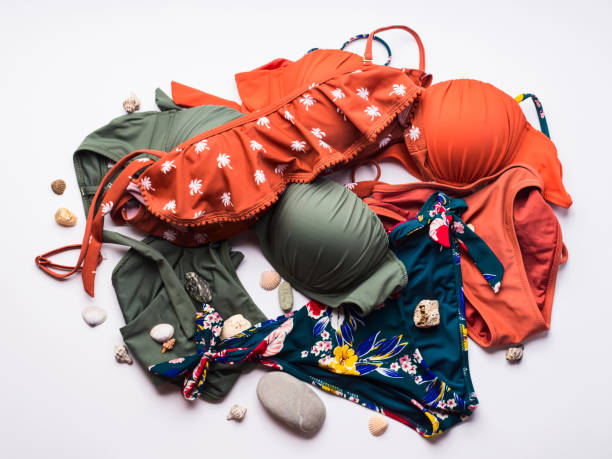
MOQ meaning in manufacturing
MOQ stands for Minimum Order Quantity. It represents the absolute smallest number of units a factory will accept for a single production run. In apparel manufacturing, suppliers do not just look at total order volume. They typically set swimwear minimums per style and per color. You might need to order 100 units of a specific bikini top in black before the factory turns on the machines.
- Baseline volume: Standard Aktivkleidung Und swimwear factories set a practical baseline of 100 pieces per style.
- Low-volume ranges: Typical manufacturing minimums range from 30 to 300 pieces depending on the facility.
- Fabric constraints: Distinct materials like recycled nylon or standard polyester carry their own roll minimums, which dictate your volume requirements.
- Pre-production sampling: Factories run a separate batch of one to five pieces at a higher per-unit cost before you commit to the official bulk MOQ.
Why MOQs exist in swimwear production
Swimwear manufacturing requires heavy upfront investment in fixed-line setup costs. Before a single swimsuit gets sewn, factories handle pattern grading, marker making, and complex machine adjustments for specialized stretch fabrics. Spreading these fixed setup costs over a larger volume keeps the per-piece production price competitive and protects factory profit margins. Establishing minimums stops factory lines from dealing with frequent, inefficient changeovers, which optimizes overall capacity and production scheduling.
- Material consumption: Fabric mills sell stretch materials, linings, and elastics by the roll. Factories demand enough volume to consume these materials economically and prevent excess waste.
- Quality control: Running adequate batch sizes gives sewing lines time to stabilize machine settings. This guarantees consistent stitch tension and quality control across all garments.
- Efficiency optimization: Minimums prevent frequent line changeovers, allowing the factory to stabilize production scheduling.
Typical MOQ Requirements in Swimwear Manufacturing
Standard MOQ ranges by factory
Factories set Minimum Order Quantities (MOQs) to establish the smallest number of garments they will produce in a single run. In swimwear, manufacturers usually define MOQs per style—a distinct bikini set or one-piece pattern—and often add specific per-color and per-size ratio rules.
Startup-friendly swimwear manufacturers typically set 100 pieces per style as the standard baseline for custom bikini sets Und 100 to 150 pieces for one-pieces. Private-label stock styles using pre-existing patterns drop the requirement to 50 pieces per style. Traditional custom swimwear factories require much higher volumes. They ask for 200 pieces per style in domestic markets and push up to 500 to 1,000 pieces per style for large-scale operations or when using custom fabric runs.
| Product Type | Typical MOQ (per style) | Production Notes |
|---|---|---|
| Bikini sets | 100 Stk | Standard baseline for specialized swimwear factories |
| One-piece swimsuits | 100–150 pcs | Pushed higher due to material usage and construction |
| Boardshorts / men’s trunks | 200 Stk | Requires different machinery and higher fabric consumption |
| Private-label ready styles | 50 Stk | Lower barrier because patterns and grading already exist |
| Traditional large factories | 500–1000 pcs | High volume tied to efficiency and fabric mill commitments |
Differences between bikini and one-piece MOQs
Specialized factories use 100 pieces per style as a shared baseline for both bikinis and one-pieces. But manufacturers frequently push one-piece MOQs closer to the 150-piece mark to protect their profit margins. One-piece swimsuits consume more outer fabric and lining per unit than bikinis. This higher material usage reduces marker efficiency. Factories need larger runs to justify the cutting setup and minimize scrap waste.
Construction and fit complexity drive up one-piece requirements. Longer seams, more coverage points, and tricky torso grading demand extra sewing operations and quality control checks, leading factories to require higher unit counts. Bikini sets offer more MOQ flexibility. Their smaller pattern pieces allow for better fabric utilization across sizes, and factories sometimes split MOQs across tops and bottoms if they use the identical fabric and colorway.
Factors that affect MOQ levels
Several core variables dictate the final production limits a factory will accept for your swimwear order:
- Fabric choice: Stock fabrics and core colors allow factories to offer MOQs as low as 50 to 100 pieces per style. Custom-dyed, custom-printed, or specialty recycled fabrics require 150 to 200 pieces to satisfy the fabric mill’s minimum roll requirements.
- Design complexity and custom trims: Garments with built-in cups, underwires, or cut-outs require extra pattern pieces and sewing time. Custom metal hardware or branded elastics also carry supplier minimums that force the overall garment MOQ higher.
- Size runs and colorway splits: A factory might require 100 pieces per style per color. A single style split across three colors demands 300 total pieces. Spreading small orders across too many sizes reduces cutting efficiency and triggers higher minimums.
- Brand negotiation leverage: Brands strategically lower practical MOQs by combining multiple styles into a single fabric batch. Presenting a clear growth forecast, utilizing the factory’s house fabrics, and committing to repeat orders give buyers leverage to negotiate better minimums.
Scale Your Custom Swimwear Brand Fast
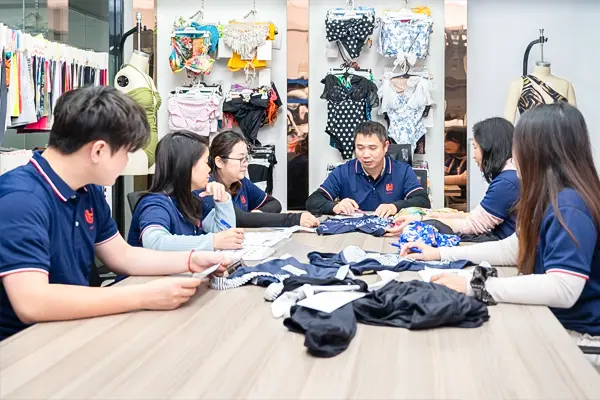
How MOQs Impact Your Swimwear Business
Cash Flow and Inventory Pressure
High MOQs can put significant pressure on your cash flow. You may need to invest a large amount of money in inventory long before any sales happen. This is especially challenging in the seasonal swimwear market. To reduce financial risk, you can negotiate flexible payment terms, request split shipments, or start with smaller production runs. These strategies help you manage inventory more efficiently and keep working capital available for growth.
Product Variety Limitations
MOQ requirements often apply to each style, color, and size. As a result, you may have fewer opportunities to offer a wide range of products. This can make it harder to test new designs or serve different customer preferences. One practical solution is to build capsule collections using the same fabrics across multiple styles. You can also discuss program-based minimums with suppliers to gain greater flexibility.
Risk Management for New Collections
Launching a new swimwear design always involves uncertainty. Large orders for untested styles can lead to excess inventory and costly markdowns. Working with low-MOQ manufacturers allows you to test demand before making larger commitments. You can also collect pre-orders from retailers or customers to validate interest early. This approach reduces risk and helps you make production decisions based on real market feedback.
Common Mistakes New Brands Make with MOQs
Over-Ordering Too Early
Many new brands order larger quantities than necessary to secure lower unit costs. However, this can leave you with excess inventory if certain styles or sizes do not sell as expected. It also ties up valuable capital that could be used for product development, sampling, or marketing. A better approach is to launch with a small collection and focus your MOQ across a few core styles.
Ignoring Factory Constraints
A common mistake is assuming that a factory’s MOQ applies equally across all styles, fabrics, and colors. In reality, manufacturers often have separate requirements for materials and production processes. Choosing a supplier based only on a low MOQ can also create quality issues later. You should discuss MOQ requirements early and work with a manufacturer that has proven experience in swimwear production.
Poor Demand Forecasting
Many startups rely on general apparel sales assumptions when planning swimwear inventory. However, swimwear demand is influenced by factors such as fit preferences, support needs, and seasonal buying patterns. Ordering too many styles too soon can make inventory management difficult and reduce sales visibility. Testing demand through pre-orders or small production runs helps you gather real data and make more accurate forecasting decisions.
How to Negotiate MOQs with Manufacturers
Building long-term partnerships
Factories view unproven brands as high-risk clients. You need to present your business as a stable, reliable partner right from the first interaction to encourage them to drop their minimums.
- Provide a realistic volume roadmap: Outline your immediate launch plans alongside specific production targets for future capsules.
- Offer an upfront deposit: Sign the agreement and put money down to demonstrate financial commitment and secure capacity before final sample approval.
- Reorder winning styles consistently: Help the factory maintain stable operations instead of overhauling your entire collection every season.
- Keep communication prompt: Approve your samples on schedule and avoid disruptive late-stage design changes.
Manufacturers prioritize buyers who make production predictable. A clear roadmap paired with reliable payment terms gives the factory the confidence to flex its order requirements.
Adjusting design complexity
Complex styles require more setup time, difficult pattern work, and expensive trim sourcing. You easily negotiate lower garment minimums when you reduce this technical friction.
- Select stock fabrics and core colors: Bypass the high fabric minimums required for custom dyeing and printing by choosing materials the factory already holds.
- Ask about deadstock materials: Use high-quality fabrics from previous runs to achieve very low minimums on small batches.
- Stick to clean silhouettes: Avoid complex features like excessive cut-outs or multiple integrated padding systems.
- Standardize your trims: Use standard elastics, linings, and hardware finishes across multiple styles to reduce the factory’s procurement risks.
When you limit material variables, the factory cuts multiple styles as a single production batch. This strategy lowers their raw material exposure and incentivizes them to accept a smaller overall order.
Scaling orders step by step
Do not push for a massive production run immediately. Use a staged approach to validate your product performance and build supplier trust gradually.
- Commission one to three samples per style: Pay standard development rates for market testing before you even discuss bulk minimums.
- Negotiate a lower total order minimum: Accept a higher per-unit price and simpler trim choices on your first run to bring the baseline quantity down.
- Group quantities across styles: Consolidate your numbers by ordering 400 total pieces split into 100 units across four different designs.
- Schedule off-peak production: Run your initial low-volume batches during slower periods when factories actively look to keep their sewing lines busy.
Treat your first batch as a paid pilot test. By absorbing a slightly higher unit cost early on and timing your orders strategically, you secure the exact inventory you need without tying up excess capital.
Häufig gestellte Fragen
What is the typical MOQ for swimwear production?
Most swimwear manufacturers require between 100 Und 300 pieces per style. Some low-MOQ suppliers may accept 30–50 pieces, while larger factories often require higher volumes. For many new brands, around 100 pieces per style offer a practical balance.
Why do swimwear factories require high MOQs?
Factories use MOQs to cover production setup costs and material requirements. Swimwear fabrics, trims, and manufacturing processes often involve minimum purchasing quantities. Higher order volumes also help factories maintain efficiency and keep production costs more competitive.
Can new brands negotiate lower MOQs with manufacturers?
Ja. Many manufacturers are willing to offer lower MOQs, especially for startups. You may achieve this by using stock fabrics, limiting customizations, or accepting a slightly higher unit cost. Building a long-term partnership can also improve flexibility.
What factors influence swimwear MOQ levels?
Several factors affect swimwear MOQs, including fabric sourcing, design complexity, factory size, and customization requirements. Custom prints, specialty trims, and multiple color options usually increase minimums, while standard materials and simpler designs can help reduce them.
Letzte Gedanken
MOQs play a major role in every swimwear brand’s sourcing strategy. The quantity you choose affects production costs, inventory levels, cash flow, and overall business flexibility. Rather than focusing only on unit price, it is important to select an MOQ that aligns with your budget, sales goals, and stage of growth. The right approach helps reduce risk while creating a stronger foundation for long-term success.
As a professional swimwear manufacturer, HeWang Mode offers a wide range of products, einschließlich Bikinis, einteilige Badeanzüge, rash guards, Und Resort-Kleidung, usw. With flexible production capabilities, reliable quality control, Und extensive customization options, we help bring your designs to life efficiently and consistently. Whether you are launching a new collection or expanding your product range, we look forward to partnering with your brand. Contact us today to start your next swimwear project.