Choosing the right model in the OEM vs ODM vs Private Label Swimwear debate directly determines your brand’s scalability and financial viability. Selecting the wrong path creates an operational bottleneck, leading to sunk development costs, unmanageable inventory risk, and a critical loss of speed-to-market.
This analysis benchmarks each manufacturing model by its financial and operational impact. We evaluate the trade-offs between upfront investment costs, ranging from $500 to over $3,500 for a first run, and total lead times, from two weeks to six months, to provide a clear decision framework for swimwear buyers.
What Is OEM Swimwear Manufacturing?
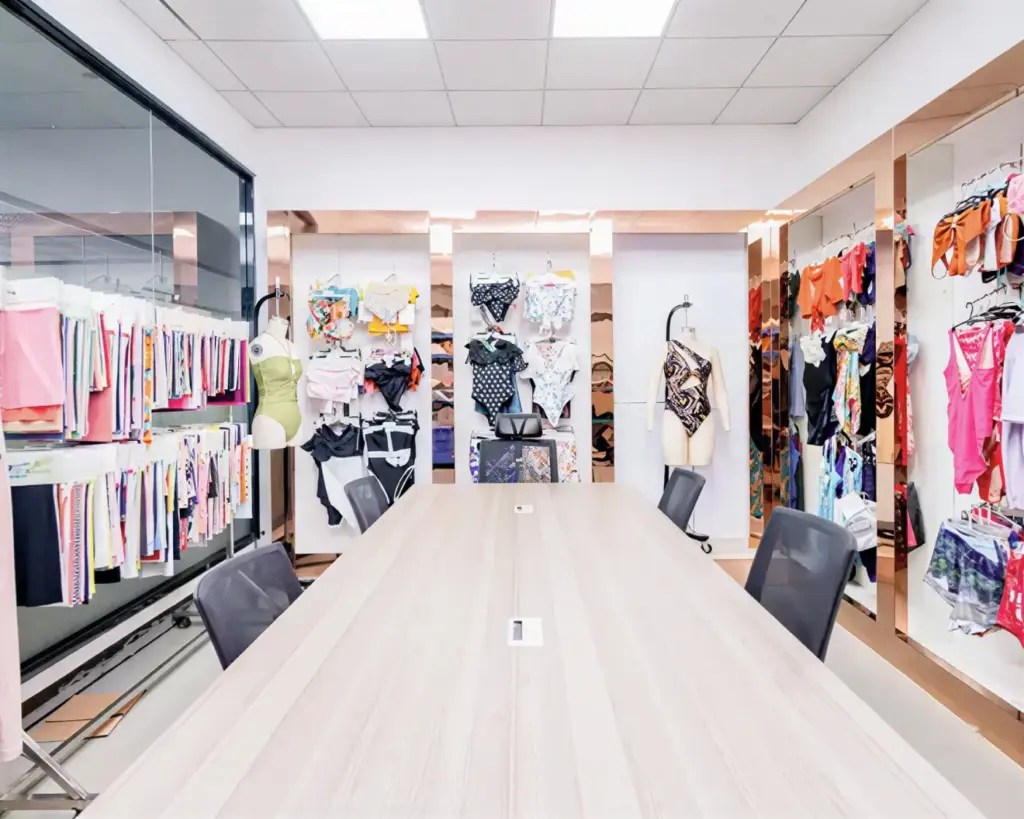
OEM manufacturing is straightforward: your brand provides a complete, original swimwear design, and a factory produces it exclusively for you. You own the design, they handle production.
The Core Model: Brand-Owned Design, Factory-Made Product
In an OEM (Original Equipment Manufacturing) relationship, a brand provides a specialized factory with its complete, original swimwear designs and technical specifications. The factory’s job is simply to manufacture the garments precisely to those requirements, under the brand’s label.
The brand retains full intellectual property and creative control. The factory doesn’t own the designs and cannot resell them. The manufacturer handles the entire production process—from sourcing the specified materials to cutting, sewing, and running quality control.
Key Distinctions from ODM and Private Label
It’s easy to confuse these terms, but the differences are critical. Getting them wrong is a costly mistake.
- OEM vs. ODM: With OEM, you provide your own unique design. With ODM (Original Design Manufacturing), you select and modify a design from the factory’s existing catalog. The core design belongs to them, not you.
- OEM vs. Private Label: OEM involves creating a fully custom product from scratch based on your technical pack. Private label is simply adding your brand’s logo to a generic, pre-made product with minimal, if any, changes.
OEM offers the highest level of control and customization. It’s the right model for brands with a distinct vision that need to protect their intellectual property and ensure their product is genuinely unique.
What Is ODM Swimwear Manufacturing?
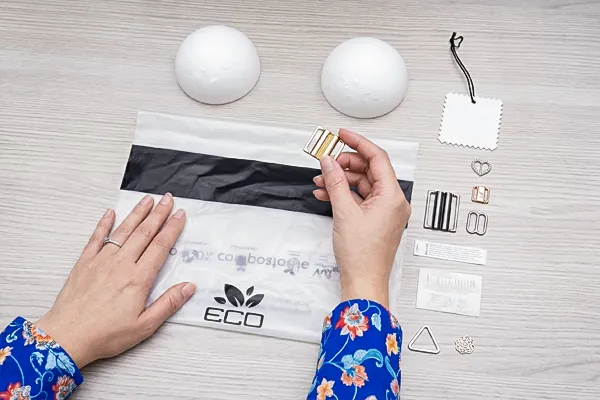
ODM manufacturing lets you brand and sell factory-designed swimwear. It’s a fast path to market that involves customizing pre-made styles with your own logo, colors, and prints.
The Core Model: Factory Designs, Brand Customization
In an Original Design Manufacturing (ODM) model, you aren’t starting from scratch. The factory has already done the heavy lifting of designing and developing a collection of swimwear styles. Your job is to select what works for your brand and make it your own.
- An ODM swimwear factory designs and develops its own collections. These are ready-made styles with proven fits and construction.
- Your brand chooses from these pre-designed models and applies your logo, labels, and packaging.
- The factory typically keeps the intellectual property (IP) for the core design. This means other brands can also use the same base silhouette.
- You can request minor modifications. Common changes include specifying different colors, applying unique prints, or selecting from a list of approved fabrics.
The Process from Catalog Selection to Final Product
The ODM process is straightforward and built for speed. It removes the long, technical development phase required when creating a completely new product.
- You begin by looking through the manufacturer’s catalog of pre-designed swimwear, which includes styles like bikinis, one-pieces, and rash guards.
- Once you pick a base model, you give the factory your specific requirements for fabrics, colors, and branding elements like logos and tags.
- The factory then handles the complete production run. This includes sourcing materials, cutting, sewing, and performing all quality control checks.
- Your swimwear arrives finished and ready for retail, already packaged with your brand’s unique tags and labels.
Launch Your Swimwear Collection in 30 Days
What Is Private Label Swimwear?
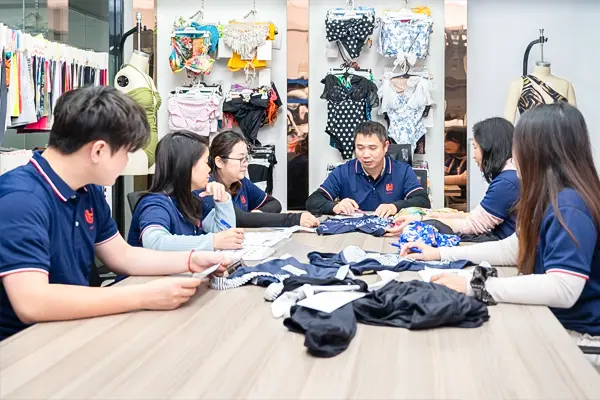
Private label swimwear lets you sell factory-made suits under your own brand, offering enough customization to create a unique line without the cost of full custom design.
Brand-Specific Production by a Partner Factory
With private label swimwear, you partner with a third-party factory to produce suits sold exclusively under your brand’s name. The factory handles the manufacturing, but your brand controls the final product’s presentation, marketing, and sales. It’s a strategic middle ground—you get a product that feels unique without the high cost and complexity of designing a collection entirely from scratch.
This model gives you control over the elements that define your brand identity. You can typically customize:
- The specific fabrics, colors, and prints used.
- Branding components like labels, hang tags, and packaging.
- Minor adjustments to fit or trims to align with your aesthetic.
Key Distinction from White Label
People often confuse private label with white label, but the difference is critical. Private label manufacturing creates an exclusive product line for one brand. This gives you more control and helps you build a distinct market position.
White label is simply rebranding a generic, pre-made product that other companies can also sell. The main difference is the level of customization. Private label allows you to modify the product itself, not just the logo and tags. Brands choose private label to build a unique identity, while white label is a faster path to market with minimal product input.
Cost Comparison
The real cost difference isn’t the per-unit price. It’s the upfront investment in design and development, which varies dramatically between OEM, ODM, and private label models.
Initial Investment and Development Costs
This is where the models truly diverge. Your upfront cash outlay is directly tied to how much custom work you require. Private label is the leanest path, while full OEM requires a significant budget for design, sampling, and setup.
Private label is your lowest-cost entry point, typically requiring just $500 to $2,000 for a first program. You’re essentially paying for branding and a small production run, not design. The investment covers basics like sample confirmation, label setup, and the first small batch of inventory (often 50-100 units).
ODM (Original Design Manufacturing) sits in the middle, with a common initial investment of $1,500 to $5,000 for a small launch. You avoid the high cost of creating patterns and tech packs from scratch because the factory provides proven base designs. Your investment goes toward customizing those designs with unique prints, colors, and branding, plus one or two rounds of sampling.
OEM (Original Equipment Manufacturing) carries the highest upfront investment. A first run of a single custom style can cost $1,800 to $3,500, and a full collection can easily run into the tens of thousands. This is because you fund the entire development process from the ground up.
- Creating professional tech packs for each design.
- Multiple rounds of sampling (2-3 is common) to nail the fit and construction.
- Potential costs for sourcing custom fabrics or creating unique hardware.
Per-Unit Manufacturing Costs
The per-unit cost is the price you pay for each finished swimsuit, excluding development fees, shipping, and duties. While upfront costs differ wildly, the per-unit prices are more closely clustered, though a clear hierarchy exists at low-to-mid volumes.
- Private Label Swimwear: Typically $5–$15 per piece. This is the lowest range because the factory has already amortized all design and tooling costs across many customers.
- ODM Swimwear: Around $6–$20 per piece. It’s often 15-30% cheaper than an equivalent OEM product because the factory reuses its own pre-developed patterns.
- OEM Swimwear: Roughly $8–$25 per piece. This is the highest at lower volumes because the price reflects the custom nature of the production run.
But these numbers change with scale. At very high volumes—think 10,000 units or more per style—the per-unit cost of OEM can drop significantly. Once development costs are amortized and production is optimized for one specific design, OEM can become just as cost-effective as, or even cheaper than, ODM.
Customization Comparison
OEM gives total design control but is slow and costly. Private Label is fast and cheap but generic. ODM is the middle ground for balancing speed with brand identity.
Scope of Customization by Manufacturing Model
The level of control you have over the final product is the biggest difference between these three models. It ranges from complete creative ownership to simply adding your logo to a finished design.
OEM: Maximum Customization
With OEM (Original Equipment Manufacturing), you control everything. The factory builds exactly what your tech pack specifies. Your brand owns the final design and all intellectual property. Customization is practically unlimited.
- Silhouette & Pattern: Create completely custom fits, from coverage and neckline depth to support structures like underwires or compression panels.
- Fabric & Performance: Choose any fabric you want, including recycled fibers, performance blends with specific UPF ratings, or chlorine-resistant materials.
- Prints, Colors & Artwork: Develop exclusive prints and specify custom colorways using Pantone codes for panels, straps, and bindings.
- Construction & Hardware: Dictate stitching types, seam placements, and select custom-designed hardware like clasps, rings, and zippers.
ODM: Structured Customization
ODM (Original Design Manufacturing) is about adapting a factory’s existing, pre-tested designs. You don’t start from scratch, but you can still make a style your own through surface-level changes. The factory owns the base pattern.
- Base Style Selection: Choose from the manufacturer’s catalog of proven silhouettes. Minor pattern tweaks like strap width or leg height may be possible.
- Fabric & Color Options: Select from a list of pre-qualified fabrics and existing color cards. Full custom colors are sometimes possible but may require higher minimums.
- Prints & Graphics: Apply your brand’s all-over prints to the factory’s patterns or use their prints with your color scheme.
- Branding: Add your own labels, logos, hangtags, and packaging.
Private Label: Branding-Focused Customization
Private Label is the most straightforward model. You select a finished product from a catalog and put your brand on it. The core design, fit, and construction are fixed.
- Product Selection: Choose from the factory’s existing, ready-made swimwear models.
- Branding & Identity: The main customization is adding your brand’s labels, hangtags, and packaging.
- Color Options: You can often choose from the standard color runs available for that specific style.
- Logo Application: Add your logo via screen printing, heat transfer, or embroidery.
Comparing Trade-offs in Cost, Speed, and Brand Uniqueness
Choosing a model isn’t about which is “best”—it’s a strategic decision. You’re constantly trading uniqueness for speed, and control for cost. Understanding this balance is key.
Brand Uniqueness: With OEM, your design is proprietary. No one else has it. In an ODM model, the base silhouette is likely sold to other brands, so your uniqueness comes from your prints and color choices. Private Label offers the least differentiation, as competitors can sell the exact same suit with a different tag.
Speed to Market: If you need product fast, Private Label is the winner, often getting product to you in 2-8 weeks. ODM is the middle path, typically taking 1-3 months. OEM is the slowest, requiring 3-6 months or more because you’re developing a completely new product that needs multiple rounds of sampling and testing.
Cost & Investment: Private Label has the lowest barrier to entry. You can launch a small collection for as little as $500–$2,000. ODM requires a moderate investment, usually around $1,500–$5,000 to get started. OEM demands the most capital. Upfront development and higher MOQs mean a single custom style can cost $1,800–$3,500 for a first run, and full collections can easily run into the tens of thousands.
MOQ Comparison
OEM has the highest MOQ to cover custom development costs. Private label is lowest by using stock designs. ODM sits in the middle with semi-custom options.
Typical MOQ by Production Model
Minimum Order Quantity (MOQ) isn’t a random number. It’s tied directly to the production model you choose. For swimwear, the volume commitment changes dramatically based on how much custom work the factory needs to do.
- Private Label Swimwear: Expect the lowest MOQs, typically around 50–100 pieces per style. This model is built for speed and testing, using pre-existing designs.
- ODM Swimwear: The MOQ sits in the middle, usually at 200–300 pieces per style. You’re customizing a factory’s existing patterns, which is more efficient than starting from zero.
- OEM Swimwear: This requires the largest commitment, generally 300–500 pieces per style, per color. Some factories specializing in startups might go lower, but this is the standard benchmark.
Why MOQs Differ Across Models
The differences in MOQs come down to simple economics. Factories need to cover their setup and development costs for each production run. The more unique your design is, the higher those costs are, and the larger the order needs to be to make it profitable.
With an OEM model, the factory is creating a new pattern, grading it for all sizes, sourcing specific materials, and running multiple sample rounds just for you. These are significant upfront costs that must be spread across a larger number of units. This is why OEM MOQs are the highest.
ODM is a middle ground. The factory has already developed and tested the base patterns. Your customizations (like prints or colors) have lower setup costs, so they can accept a smaller order. Private label has the lowest MOQ because there’s often zero new development; the factory may even have the product in stock, just waiting for your brand’s labels.
Lead Time Comparison
Private label is fastest at 2–8 weeks. OEM is slowest at 3–6+ months. The timeline you get depends entirely on how much custom development your design needs.
End-to-End Timelines: OEM vs. ODM vs. Private Label
Total time-to-market is more than just the factory’s production window. It includes everything from design and sampling to shipping. The biggest variable is how much development work is needed before a single piece is cut for bulk production. This is where the models differ most.
- OEM Swimwear: 3–6 months. This is the longest path because you’re starting from scratch. The timeline includes creating tech packs, developing and grading new patterns, sourcing custom fabrics, and going through multiple rounds of samples to get the fit right. Each revision adds weeks to the calendar.
- ODM Swimwear: 1–3 months. ODM is faster because the foundational work is already done. You select from the factory’s pre-designed and pre-tested swimwear styles. The timeline is mostly for customizing colors, prints, and branding, with maybe one quick sample round for approval.
- Private Label Swimwear: 2–8 weeks. This is the fastest route by far. You’re essentially picking an off-the-shelf product and just adding your brand’s labels and packaging. With minimal development, production can start almost immediately after you confirm your branding.
Key Factors That Influence Production Speed
Beyond the manufacturing model you choose, several operational factors can either speed up or delay your swimwear production. Managing these variables is key to hitting your launch dates, especially in a seasonal business like swimwear.
- Design Complexity: A simple bikini will always be faster to produce than a multi-panel performance suit with bonded seams and integrated support. Complex construction requires more pattern work, more sampling, and slower assembly.
- Fabric and Materials: Using the factory’s in-stock fabrics is quick. If you require a custom-milled fabric with a unique texture or performance finish, you add weeks of sourcing and procurement time to the schedule. Custom prints also add time for strike-offs and color approvals.
- Sampling Iterations: Each time you request a change and need a new sample, you add 1-2 weeks to your timeline. OEM projects often have 2-3+ sample rounds to perfect the fit, while ODM and private label may only need one, or none at all.
- Quality Requirements: If your brand requires extensive lab testing—for things like chlorine resistance, UV protection, or colorfastness—this adds an extra 1-3 weeks to the timeline for testing and certification.
- Logistics: The final leg of the journey matters. Standard sea freight from Asia takes about 20-35 days. If you’re in a hurry and have the budget, switching to air freight can cut that transit time down to just a few days.
Which Model Is Best for Startups?
Private Label and ODM offer a fast, low-risk entry for testing the market. OEM is for capitalized startups aiming for product differentiation from the start.
Private Label & ODM: For Lean Entry and Market Testing
For a new brand, Private Label is the fastest and most direct path to market. It minimizes risk and capital outlay, letting you test ideas without a heavy investment in technical design. Your resources can go directly into what matters most at the start: building a brand and acquiring customers.
ODM strikes a balance. You get to leverage a factory’s proven, pre-tested designs and then customize them with your own prints and colors. This lets you build a distinct brand identity much faster and cheaper than starting from scratch, but with more creative input than a basic private label product.
Both models are built for first-time founders or brands that need to validate concepts quickly. The lower minimum order quantities (MOQs) reduce inventory risk, and the shorter lead times get you to market faster. You aren’t bogged down in months of product development.
With these models, the product is your foundation, but your brand is the differentiator. The focus is on creating a compelling story, aesthetic, and customer experience around a proven, ready-to-brand product.
OEM: For Differentiated Brands with Capital
The OEM model gives a startup complete ownership of its designs. You create unique silhouettes and fits that competitors can’t easily replicate. This isn’t about a quick launch; it’s about building long-term, defensible brand equity from the product up.
OEM is necessary when your product’s technical innovation is the core selling point. If you’ve engineered a specialized fit, a unique support structure, or a proprietary material blend, this is the only path that protects your intellectual property.
This approach requires a significant upfront investment. You’re paying for development, pattern making, multiple sampling rounds, and higher minimum order quantities (MOQs). There’s no way around the fact that creating something truly new costs more.
OEM is the right choice for well-funded startups or founders who already have experience in apparel production. It’s for brands ready to manage a more complex supply chain and who have the capital to see a lengthy development process through.
Which Model Is Best for Established Brands?
Established brands use a hybrid strategy. OEM protects core identity and performance lines, while ODM and private label provide tactical speed for trends and assortment depth.
The OEM Model for Design-Centric and Performance Brands
For an established brand, the OEM model is the backbone of the business, especially when brand identity is tied to a specific fit, a unique silhouette, or technical performance. This approach gives you complete ownership and control over the design IP, from the patterns and grading to the exact fabric specifications and construction methods. It’s how you protect your signature styles and ensure fit consistency season after season.
Brands known for high-performance athletic swimwear or specific shaping technology rely on OEM. They can’t risk using a generic block when their reputation is on the line. The higher upfront investment in tech packs and sampling is a calculated cost to maintain brand equity and customer loyalty. OEM is for building long-term, defensible assets, not quick wins.
ODM and Private Label for Market Agility and Assortment Depth
Established brands use ODM and private label as tactical tools, not for their core collections. ODM is perfect for responding quickly to market trends. You can select a factory’s pre-developed style, apply a custom print or colorway, and launch a capsule collection in a fraction of the time it takes for full OEM development. This allows you to test new ideas with less risk and capital.
Private label is a strong choice for expanding assortment or entering a new category. For example, a large apparel brand can use a private label program to add a swimwear line without building an internal swim design team from scratch. By leveraging a factory’s proven swimwear blocks and securing contractual exclusivity, the brand can launch a line that is unique to them in the market. These models are about speed, margin, and smart assortment management to complement the core OEM-driven products.
Common Mistakes When Choosing a Manufacturing Model
The biggest errors happen when a brand’s needs for control, speed, and cost don’t align with the manufacturing model they choose. Each model serves a different purpose.
Misunderstanding the Roles: Control, Design, and Speed
Many brands choose a model based on a vague idea of “good” or “premium” instead of what it actually does. The most frequent error is confusing the fundamental purpose of each relationship and expecting capabilities that aren’t there.
If you choose the OEM model, you are expected to provide a complete, production-ready tech pack. The factory’s job is to execute your blueprint, not design it for you. This gives you total control over the fit, fabric, and construction, but it’s also the slowest process because of the multiple sampling and refinement rounds. A common mistake is approaching an OEM partner with only a concept, which leads to major delays and spiraling costs.
The ODM model is a balance. You select from a factory’s catalog of pre-developed, tested styles and then customize the aesthetics—like prints, colors, and branding. It’s much faster than OEM because the core pattern and fit are already solved. The mistake here is trying to make major structural changes to a factory’s base design. Requesting a completely new neckline or altering the core fit turns it into a slow, expensive OEM project, defeating the speed advantage of ODM.
Private Label is the fastest path to market. You pick a finished or nearly-finished product and add your brand’s labels and packaging. Control is minimal. The critical error is expecting any design input. This model isn’t for creating a unique product; it’s for quickly launching a branded line with near-zero development effort.
Miscalculating the True Cost and Volume Commitments
Another major pitfall is looking only at the per-unit price. The true cost is a combination of upfront development fees, unit costs, and the total cash required for the Minimum Order Quantity (MOQ). Brands often fail to budget for all three, leading to serious financial strain.
The most common cost mistakes include:
- Ignoring Upfront Costs: OEM requires the largest investment for tech packs, pattern making, and multiple sample rounds (often $500–$3,000+ per style). Private Label has almost none. Choosing OEM without a separate development budget is a recipe for failure.
- Underestimating Total Cash Outlay: Your MOQ dictates your total investment. An OEM run with a 500-piece MOQ at $15/unit costs $7,500 in production alone, not counting development. A Private Label run of 100 pieces at $9/unit is only $900. You must have the capital and sales channels to support your chosen model’s volume.
- Fixating on Per-Unit Price: At low volumes, OEM is almost always the most expensive option when you factor in amortized development costs. The per-unit price only becomes competitive at massive scales (10,000+ units), a level most brands don’t reach initially.
Choosing a model without a realistic sales forecast to justify its MOQ and upfront investment is one of the quickest ways to burn through capital. New brands in particular should use Private Label or ODM to validate demand before committing to the high-stakes financial and inventory risks of OEM.
Decision Framework for Buyers (AiUvai)
Choose based on what you have. Go OEM for full tech packs, ODM for speed with customization, and Private Label for the lowest-risk market test.
Evaluating Trade-offs: Control, Speed, and Investment
Selecting a manufacturing model is a balancing act. You’re constantly trading control for speed and investment for uniqueness. Here’s the breakdown of what you’re giving up to get something else.
- Design Control: OEM gives you total command over the product. ODM provides partial control over a factory’s base design. Private Label offers the least, focusing almost entirely on branding.
- Time to Market: Private Label is the fastest path to launch. OEM is the slowest since it requires a full development cycle from scratch. ODM sits in the middle.
- Upfront Investment: OEM demands the highest initial investment for custom patterns and sampling. Private Label is the cheapest way to get started.
- Uniqueness: An OEM product is yours alone. With ODM, the base silhouette is likely shared with other brands. A Private Label product relies on your branding to feel unique.
- Operational Complexity: OEM requires significant technical input and management from your team. Private Label is the most straightforward to manage.
Matching a Model to Your Business Goal
The right model depends on your business goal, not just your budget. Don’t choose OEM because it sounds “premium”; choose it only if your brand’s survival depends on a proprietary fit or feature.
Go with OEM if your competitive advantage is the product itself—a unique fit, a technical innovation, or a signature silhouette. In this case, you are building a long-term asset, not just a seasonal item. This path gives you complete control over patterns, fit, and performance, which is critical for brands built on technical superiority.
Choose ODM if your goal is a fast launch with a distinct aesthetic. It’s the practical middle ground for brands that differentiate through styling, custom prints, and color stories rather than unique construction. You leverage the factory’s proven, pre-tested shapes, which saves time and reduces the risk of fit problems.
Start with Private Label if you need to enter the market quickly, test a concept, or add swimwear as a low-risk extension to your brand. This model has the lowest development burden and fastest turnaround, letting you validate demand with minimal capital before committing to a more complex manufacturing path.
Final Thoughts
Choosing your manufacturing model is the most critical operational decision you will make. This framework is your defense against cash burn, inventory risk, and launching a brand that can’t compete. Aligning your production method with your business stage is the only path to sustainable profit in the swimwear market.
Don’t guess on execution. The right model depends on your specific capital, brand vision, and timeline. Contact our team to schedule a strategic consultation and build a sourcing plan that matches your goals.