Sourcing the best men’s swim trunks starts with clear specifications for fabric, ajustar, and construction. The wrong fabric or inseam can lead to chafing, poor durability, and inconsistent fit, all of which can create problems during product testing and after launch.
This guide compares common polyester/spandex and nylon/spandex options, looks at practical fit considerations, and outlines key specifications to review during OEM sourcing and quality control. A 5- to 7-inch inseam is a versatile starting point for many men’s swim trunk styles, but the final length should match the target customer and intended use.
Best Men’s Swim Trunks: An Executive Overview

High-quality men’s swim trunks typically combine a comfortable fit with quick-drying, stretch fabrics. For many brands, versatility, conforto, and recycled materials are also important considerations when developing new styles.
Essential Product Qualities: Ajustar, Fabric, and Function
A good pair of swim trunks depends on several elements working together, especially fit, fabric, and practical features. These are the main areas brands should review when developing or sourcing a new style.
- A comfortable, well-proportioned fit is important across most men’s swim trunk styles. A 5- to 7-inch inseam is a versatile range for many casual and hybrid designs, while shorter or longer lengths can work better for specific body types and activities.
- Quick-drying synthetic fabrics with some stretch are widely used in men’s swim trunks. Polyester or nylon blended with elastane can provide a useful balance of drying speed, mobility, and comfort for both water and casual wear. For a deeper look at swimwear fabric selection, see our swimwear fabric material guide.
- Practical features can make a significant difference in how swim trunks perform. Common options include an elastic waistband with an adjustable drawstring, along with mesh-lined pockets or drainage openings to help release water.
- The liner also affects comfort, apoiar, and chafing during extended wear. Traditional mesh remains common, while some newer styles use a softer compression-style liner for a more underwear-like feel.
Key Market Drivers: Versatility and Sustainability
Beyond the product itself, two major trends are shaping what customers buy and what brands need to offer to stay relevant.
- The market strongly favors multi-purpose trunks. The rise of hybrid “amphibious” shorts—designed to look good on the street but perform in the water—shows a clear shift away from single-use swimwear.
- Recycled polyester is now an established option for brands with sustainability goals. REPREVE®, for example, produces recycled polyester from post-consumer plastic bottles and offers traceability and GRS-certified recycled content.
- Buyers want a single pair of shorts that works for the entire day. The ideal product moves from the beach to a casual lunch without requiring a wardrobe change, a demand that fuels the hybrid short trend.
- Technical features can also help differentiate premium swim trunks. Depending on the target market and end use, brands may add features such as UPF-rated fabrics, chlorine resistance, quick-dry finishes, or four-way stretch.
Best Men’s Swim Trunks: Finding the Right Length and Fit
For many men’s swim trunk styles, a 5- to 7-inch inseam provides a versatile starting point. The final length should be adjusted according to the target customer, product styling, and intended use.
Swim Trunk Lengths Explained: From Short to Long
The inseam length is the single biggest factor in how swim trunks look and feel. While marketing terms get thrown around, it all comes down to a few inches of fabric. The right length depends on your height, build, and what you’re comfortable with.
- Shorter Trunks (3–5 inch inseam): This length creates a shorter, more athletic silhouette and gives the legs more visual emphasis. It can work well for customers who prefer greater mobility or a less covered look.
- Mid-Length Trunks (5–7 inch inseam): This is a versatile range for many men’s swim trunk styles. It provides moderate coverage without the extra length of traditional boardshorts and can work well for swimming, beachwear, and resort wear. The final inseam should still be adjusted for the target customer, styling, and intended use.
- Longer Trunks (8+ inch inseam): These styles provide more coverage and can overlap with traditional boardshort proportions. They may suit taller customers, customers who prefer more coverage, or designs intended for surfing and other active beach use. On shorter men, this length can make legs appear shorter.
How Swim Trunks Should Fit: Waist, Seat, and Leg Opening
A great fit is about more than just length. The trunks should feel secure without being restrictive. The goal is a tailored look, not a tight one.
The waistband should feel secure without putting excessive pressure on the body. Elastic waistbands with drawstrings are common in men’s swim trunks because they allow the wearer to adjust the fit, particularly during active use. For OEM development, the waistband tension should be checked through fit trials rather than relying on a fixed finger-width rule.
Through the seat, the fabric should lie smoothly without excessive looseness or tension. During fit testing, squats and other movements can help identify whether the rise, seat, and seams provide enough room for movement.
The leg opening should be just wide enough for comfort and movement. It shouldn’t flare out like a bell, but it also shouldn’t constrict your thigh. A slight taper from the hip to the hem creates a clean silhouette. When you walk or step up, the leg opening shouldn’t pinch or ride up excessively.
Launch Your Swimwear Line in 30 Days
Evaluating Fabric Performance in Best Men’s Swim Trunks
Fabric choice dictates everything in men’s swimwear: how fast they dry, how long they last, and how comfortable they are. It’s a game of trade-offs.
Primary Fabric Families and Blends
Most performance-oriented swim trunks use lightweight synthetic woven fabrics rather than natural fibers such as cotton. Cotton absorbs water, gets heavy, and dries slowly, making it unsuitable for performance swimwear. The market revolves around a few core synthetic options.
Polyester is widely used in swimwear because it offers good durability, color retention, and shape stability. It’s highly durable, holds color well against chlorine and sun, and resists stretching. This makes it the go-to for trunks intended for frequent pool use or a long service life. Recycled polyester (rPET) offers the same performance and has become the standard for brands focused on sustainability.
Nylon is prized for its soft, smooth hand-feel and lighter drape. Nylon is often selected for its soft hand feel, smooth surface, and lightweight drape, making it suitable for comfort-focused beach and resort styles. The trade-off is its lower resistance to chlorine, which can cause it to degrade faster than polyester with heavy pool use. It’s a popular choice for comfort-focused beach and resort trunks.
Most modern trunks are not 100% polyester or nylon. Many stretch swim trunk fabrics include a smaller percentage of elastane to improve mobility and recovery, with the exact blend depending on the fabric construction and intended fit. This is essential for mobility and a comfortable, non-restrictive fit, especially in more tailored cuts. The base fabric still determines the trunk’s core durability and resistance properties.
Key Performance Dimensions for Evaluation
When you’re evaluating swim trunk fabric, you’re really looking at a handful of practical performance metrics. These factors determine how the trunks feel and hold up in real-world use.
- Quick-Drying Performance: Drying speed depends on fiber type, fabric construction, weight, airflow, and environmental conditions. Polyester and nylon can be engineered into lightweight fabrics that release moisture relatively quickly, while mesh construction can help water drain from the garment. For OEM development, brands should define their own quick-dry requirements and validate them through material and product testing rather than relying on a universal drying-time target.
- Chlorine & Saltwater Resistance: For frequent pool use, choose fabrics and elastane systems specifically engineered for chlorine exposure. For beach and surf styles, resistance to saltwater, UV exposure, and abrasion should also be considered. The final performance should be verified through relevant material testing.
- Durability and Shape Retention: Polyester leads in holding its shape and resisting abrasion from pool decks or sand. Nylon is also strong, but can lose its shape faster with intense chemical exposure. Elastane can be particularly vulnerable to prolonged chlorine exposure, so brands developing pool-focused swimwear should evaluate the complete fabric system rather than the base fiber alone.
- Comfort and Mobility: Comfort comes from two places: hand-feel and stretch. Nylon and microfiber polyester fabrics feel softer against the skin. Four-way stretch from elastane blends allows for a full range of motion, which is crucial for any active use.
- Liner Fabric: The inner liner is just as important as the shell. Traditional polyester mesh dries fast but can cause chafing for some. Traditional mesh liners remain common, while some newer styles use smooth compression-style liners for additional support and reduced friction during extended wear.
Quick-Dry Tech and Comfort Features in Best Men’s Swim Trunks

High-quality swim trunks are typically designed to dry quickly, using lightweight synthetic fabrics and construction choices that help moisture evaporate after swimming.
Quick-Dry Technology for Rapid Water Evaporation
Fabric selection is one of the main factors affecting drying speed. Polyester and nylon are commonly used because they absorb less moisture than natural fibers and can be engineered into lightweight constructions that dry relatively quickly. Blends with about 5-15% spandex add four-way stretch for mobility while keeping the fast-drying properties intact.
Some fabrics also use a Durable Water Repellent (DWR) finish to encourage water to bead on the surface. DWR can help reduce surface wetting, although actual drying time still depends on the fabric construction, fabric weight, weather, and airflow. Rather than specifying a universal drying time, brands should define quick-dry performance through their own material and product testing.
All-Day Comfort: Liners, Stretch, and Anti-Chafe Design
All-day comfort is now a core focus, and the liner system is the most critical component. While traditional mesh brief liners offer basic support and breathability, they are often a source of chafing, especially during long walks. The modern solution is the compression liner—a built-in, soft, stretchy boxer-brief style short. These liners provide superior support and prevent inner-thigh rubbing, making them ideal for active use and all-day wear.
Beyond the liner, comfort comes from a combination of features working together. Four-way stretch shells allow for unrestricted movement, while secure elastic waistbands with drawstrings ensure a snug fit that doesn’t dig into the skin. Anti-chafe design is a system: it pairs quick-drying fabrics with smooth compression liners and sometimes dual-layer pouches to minimize friction.
Waistband and Pocket Design for Best Men’s Swim Trunks
The best trunks use a secure elastic waistband with a drawstring and have pockets built with drainage and secure closures for real-world use in and out of the water.
Waistband Designs for a Secure Fit
A secure waistband is important for swim trunks, particularly when the garment is used for swimming or active beach sports. A common construction combines an elastic waistband with an adjustable drawstring, although the exact waistband design varies by style and intended use. This pairing isn’t just for show; it provides a genuinely secure and customizable fit that holds up during active water sports like surfing, diving, or even just jumping into the pool.
- The elastic band provides a snug, comfortable fit that adapts to your body, while the drawstring allows you to lock it in place for extra security.
- Drawstring placement varies by design. Some are internal for a cleaner, more streamlined appearance, but external drawstrings offer easier and quicker adjustments.
Pocket Features for Drainage and Security
Pocket construction affects both comfort and practicality. Mesh pocket bags or drainage openings allow water to escape more easily, while a secure back pocket can help keep keys, cards, or cash in place.
- Drainage is key: Pockets should have mesh linings or dedicated drain holes. This allows water to flow out immediately, preventing drag and discomfort when you get out of the water.
- Security matters: Back pockets almost always include a secure closure, typically a zipper or Velcro flap, to keep keys, a card, or cash from getting lost in the waves.
- Standard Layout: Most trunks come with two side pockets for on-land convenience and at least one secure back pocket designed for use near the water.
Best Men’s Swim Trunks for Different Water Activities

The right trunks depend entirely on the activity. Match the cut, fabric, and features to what you’re doing in the water for the best results.
For Casual Swimming and Beach Days
For general pool and beach use, mid-length volley or hybrid trunks offer a practical balance of comfort, coverage, and versatility. Prioritize quick-drying fabric and a soft mesh liner, which are key for all-day wear without chafing. If your day involves snorkeling or time on a boat, find a pair with built-in UPF sun protection and durable material to handle the extra exposure and wear.
For Active Sports and Fitness
When you’re moving more, the technical details matter. Different sports demand different gear.
- For lap swimming, traditional baggy swim trunks are usually less suitable than streamlined swim briefs, jammers, or other competition-oriented suits. When chlorine exposure is high, fabrics and elastane systems designed for pool use are particularly important.
- For surfing, you need boardshorts with 4-way stretch and a secure, fixed waistband. This setup allows you to move freely on the board and prevents your trunks from getting pulled down by a wave.
- For beach sports like volleyball, mobility is everything. Shorter athletic trunks can provide greater freedom of movement because they place less fabric around the thighs.
OEM Production Considerations for Best Men’s Swim Trunks
Successful OEM production for top-tier men’s swim trunks hinges on precise tech packs, strict fabric specs, and rigorous quality control from sampling to bulk manufacturing.
| Product Design & Material Specs | Manufacturing, Qualidade, & Supplier Management |
|---|---|
|
|
Product Design and Material Specifications
Before you even approach an OEM, you have to nail down your product. First, define the exact use case. Are you making a casual resort trunk, a high-performance athletic short, or a hybrid “swim-to-street” model? This decision dictates everything that follows, especially fabric selection. The market standard for top-tier trunks revolves around synthetic blends, primarily polyester/spandex for its durability and nylon/spandex for its softer feel.
Your fabric specs need to be non-negotiable. Aim for a weight between 180 e 220 GSM to ensure opacity when wet without being too heavy. Key performance requirements include 4-way stretch, quick-dry capability, and high resistance to both chlorine and saltwater. For brands with sustainability goals, recycled polyester can be an important material option. Suppliers should be able to provide clear information about the recycled content and any applicable certifications. If recycled content is part of the product claim, ask the supplier for the relevant GRS documentation and traceability information covering the material used.
The tech pack should be treated as the main reference document throughout sampling and production. Clear sketches, measurements, construction details, fabric specifications, and approval points help reduce avoidable sampling errors during the OEM swimwear manufacturing process. It must include clear flat sketches, panel breakdowns, and specific seam instructions. Use flatlock seams in high-friction areas like the inner thigh to deliver on anti-chafe promises. You also need to specify the liner material (soft, breathable mesh is key) and its pattern. Details on pocket construction, like using mesh bags and adding drainage eyelets, separate a good trunk from a great one.
Manufacturing, Qualidade, and Supplier Management
Once your design is locked, the focus shifts to manufacturing and quality control. Trims and elastic also need to be specified carefully. For swim trunks, brands should define the required finish for metal eyelets and cord ends and select waistband elastic that maintains its recovery under the intended use conditions. Cheap elastic that loses its recovery after one season is a quick way to lose a customer.
A practical quality control plan should cover both laboratory testing and wear trials. This involves two main components:
- Lab Testing: Your fabric and finished garments should be tested for colorfastness to chlorinated water, seawater, and light. Also test for seam strength and pilling resistance.
- Ajustar & Wear Trials: Get samples on multiple body types. Test for waist stability when jumping into water, leg opening comfort during movement, and liner comfort after prolonged wear. Use feedback to adjust patterns before bulk production.
Why Work with an Experienced Swimwear OEM
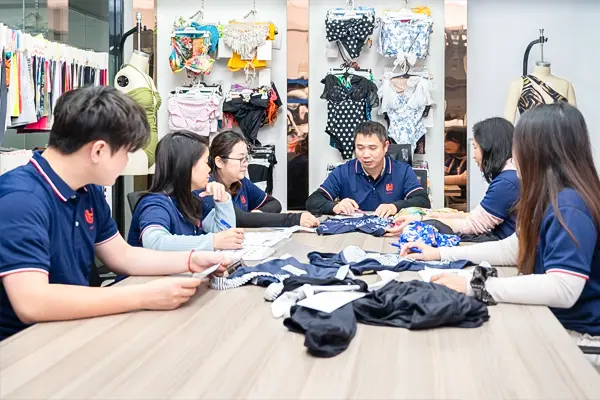
For brands developing men’s swim trunks, the factory’s pattern-making and production experience can be just as important as the fabric itself. Hewang Fashion brings more than 20 years of swimwear manufacturing experience, with an in-house R&D team supporting pattern development, sampling, and production adjustments. This is particularly useful when a new style requires changes to the rise, costura interna, liner, or overall fit across sizes. The factory also supports small-batch OEM/ODM production and maintains quality processes designed to keep specifications consistent from approved samples to bulk orders. With BSCI credentials and a focus on responsive product development, Hewang Fashion can support brands that need more than basic cut-and-sew production when developing customized men’s swim trunks.
Navigating suppliers means understanding their capabilities. Confirm each OEM’s MOQ, production lead time, and sampling schedule before development. These terms can vary depending on the fabric, construction, order quantity, and approval stage. For planning purposes, brands should confirm the exact bulk lead time with the OEM before placing the order. Build in a buffer for fabric sourcing and sample approvals. The biggest risks in OEM swimwear production are material substitution and inconsistent sizing. You control this with comprehensive tech packs, purchase orders that specify exact fabric codes, and a strict approval process for all samples (lab dips, strike-offs, size sets, and pre-production samples).
Frequently Asked Questions
What are the best men’s swim trunks?
The best men’s swim trunks depend on the intended use, target customer, and construction. For wholesale and private-label development, brands should evaluate inseam length, fabric composition, stretch, drying performance, liner construction, waistband security, pocket drainage, and durability before selecting a final specification.
What length of swim trunks is most popular?
A 5- to 7-inch inseam is a versatile choice for many men’s swim trunks. A 7-inch inseam provides a little more coverage, while a 5-inch inseam creates a shorter, more athletic look. Both lengths can work well for swimming, beachwear, and casual resort styles, depending on the target customer and intended use.
What are the most comfortable swim trunks?
The most comfortable swim trunks use soft, quick-drying fabrics and have liners designed to prevent chafing. Many of the most comfortable models replace traditional mesh with a smooth, built-in compression liner that feels like athletic shorts. A relaxed fit with a 5 to 7-inch inseam and a soft, adjustable waistband also adds to all-day comfort, in and out of the water.
Are polyester swim trunks better than nylon?
Polyester is often better suited to frequent pool use because it generally offers good shape retention and chlorine resistance. Nylon is often chosen for its softer hand feel and lightweight drape, making it well suited to beach and resort styles. The actual performance depends on the specific fabric construction and elastane system. For a long-lasting pair, polyester is often the better investment.
Do swim trunks need a mesh lining?
Swim trunks do not necessarily need a mesh lining. A liner can provide support, coverage, and added comfort, but the best option depends on the style and intended use. Traditional mesh liners remain common because they are lightweight and quick-drying, while some newer designs use soft compression-style liners to reduce friction during extended wear. Linerless trunks are also available for customers who prefer a lighter, less structured feel.
What makes swim trunks dry quickly?
Swim trunks dry quickly because they are made from synthetic fibers like polyester or nylon that absorb very little water. Polyester and nylon generally absorb less moisture than natural fibers, while lightweight construction and breathable liners can help the garment release water and dry more quickly. A lightweight fabric weave and a breathable mesh liner also help by improving airflow and allowing water to drain away. Some trunks add a water-repellent finish to make water bead off the surface, speeding up the drying process even more.
How long should men’s swim trunks be?
For a modern and versatile fit, men’s swim trunks should have an inseam between 5 e 7 inches, hitting around the mid-thigh to just above the knee. Shorter or taller customers may prefer different inseam lengths depending on body proportions and desired coverage, so brands should validate the final measurement on their target fit models. Shorter 3 to 5-inch trunks offer a sportier look, and lengths of 8 inches or more provide more modest, boardshort-style coverage.
Final Thoughts
Sourcing swim trunks based on price alone is a high-risk gamble on customer satisfaction. For brands developing men’s swim trunks, material selection and fit should be treated as core product specifications rather than afterthoughts. Poor fabric performance, inconsistent sizing, or uncomfortable construction can lead to avoidable customer complaints and returns. Clear specifications make it easier to control fit, fabric performance, and product consistency throughout sampling and bulk production.
The next step is to validate this quality yourself. We recommend ordering a sample kit to test our fabrics and construction firsthand. Contact our production team to discuss your OEM requirements and build a collection that meets these market-leading standards.