Starting a swimwear brand in 2026 is one of the most exciting moves you can make in fashion—but it is also one of the most technically demanding. The global swimwear market is projected to exceed $30 billion by 2028, driven by rising demand for sustainable fabrics, inclusive sizing, and direct-to-consumer brands. Yet most first-time founders underestimate the manufacturing complexity, fabric requirements, and fit engineering that set swimwear apart from every other apparel category.
This guide walks you through the entire process: from validating your business idea and choosing your niche, to selecting the right manufacturer, setting your pricing, and launching your first collection. Every section includes real numbers, common mistakes, and actionable steps you can follow immediately.
Are Swimwear Businesses Profitable? (Industry Reality Check)
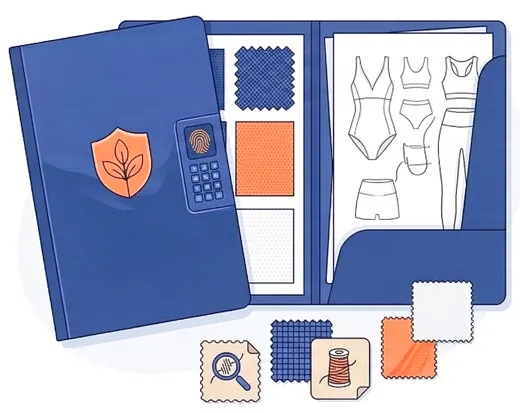
Swimwear carries some of the highest margins in fashion—but only when production costs, fit accuracy, and seasonal cash flow are managed correctly. Here are the benchmarks that matter:
- Gross margin: 60%–80% on direct-to-consumer sales; 30%–50% on wholesale orders
- Average retail price: $60–$150 for women’s bikinis, $40–$90 for men’s swim trunks
- Production cost per unit: $5–$18 depending on fabric, construction complexity, and order quantity
- MOQ range: 50–1,000+ pieces per style per color (varies by factory)
- Sampling cycle: 7–21 days per iteration
- Production lead time: 25–60 days after sample approval
- Return rate: 15%–25% for online swimwear brands (higher than average apparel due to fit sensitivity)
The key profitability driver is not just top-line revenue—it is production efficiency and fit accuracy. A brand that nails fit on the first or second sample iteration will save thousands of dollars in rework and returns. For a detailed breakdown of minimum order requirements, read our swimwear MOQ guide for new brands.
Why 80% of Swimwear Startups Fail in the First Year
Most swimwear brands do not fail because of weak marketing. They fail because of manufacturing and product development mistakes made before the first unit ever ships. The most common causes:
- Choosing a general apparel factory instead of a swimwear specialist. Swimwear requires stretch fabrics, bonded elastic, chlorine-resistant construction, and specialized sewing techniques. A factory that makes t-shirts cannot simply switch to bikinis overnight.
- Skipping proper fit testing. Swimwear must fit correctly when wet and dry, during movement, and across a range of body types. Brands that skip graded fit sessions end up with high return rates and negative reviews.
- Underestimating fabric costs and lead times. Performance swimwear fabric (nylon/spandex blends, recycled polyester) costs $8–$25 per meter. Specialty fabrics like REPREVE or ECONYL command premium prices and may have 4–8 week lead times.
- Overproducing in season one. New brands often order 5–10 styles in 10+ colorways before validating demand. The smarter approach: launch with 2–3 hero styles, test the market, then expand based on real sales data.
- No clear niche positioning. “Swimwear for everyone” is not a strategy. The brands that succeed define a specific customer, price point, and aesthetic from day one.
Understanding the differences between OEM, ODM, and private label manufacturing before you start will help you avoid the two most expensive mistakes on this list.
Let’s Plan Your Custom Swimwear Business
Before you contact any manufacturer, you need a clear business plan. This section covers the three foundations: niche definition, financial modeling, and collection planning.
Defining Your Niche and Target Customer
The swimwear market is large enough to support many different brand positions—but you need to pick yours early. Profitable niches in 2026 include:
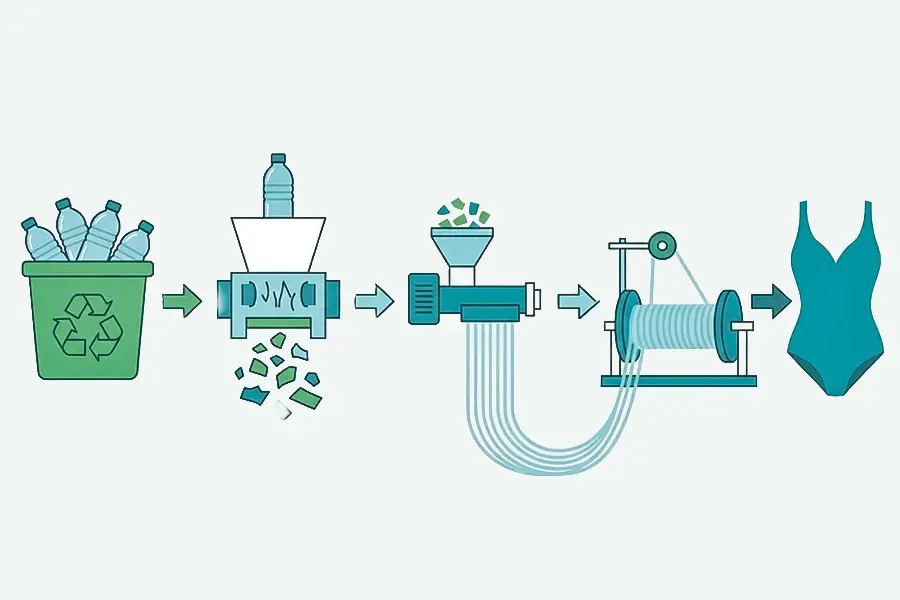
- Sustainable swimwear: Made from recycled nylon (ECONYL) or recycled polyester (REPREVE). Commands a 20%–40% price premium.
- Plus-size and inclusive sizing: Brands offering XS–4XL with proper fit engineering see higher customer loyalty and lower return rates.
- Performance and athletic swimwear: Designed for lap swimming, surfing, or water sports. Requires technical fabrics with UV protection and chlorine resistance.
- Modest swimwear: Burkinis, swim dresses, and full-coverage options. One of the fastest-growing segments globally.
- Luxury resort wear: Premium fabrics, designer details, $150+ price points. Targets the vacation and lifestyle market.
Your niche determines your fabric choices, construction requirements, pricing strategy, and marketing channels. It also determines which manufacturer is the right fit—not every factory specializes in every category. For a detailed analysis of product categories, see our guide on types of women’s swimsuits and different types of bikinis.
Calculating Startup Costs vs Revenue Potential
A realistic first-season budget for a small swimwear brand looks like this:
- Sampling (3–5 styles, 2–3 iterations each): $1,500–$4,000
- First production run (100–300 units across 2–3 styles): $2,000–$6,000
- Branding and packaging (labels, hangtags, poly bags, boxes): $500–$1,500
- E-commerce setup (Shopify, photography, website): $1,000–$3,000
- Marketing launch budget (influencer seeding, paid ads, content): $1,000–$5,000
Total estimated investment: $6,000–$19,500 for a professional first collection.
Revenue potential depends on your price point and channel. A brand selling bikinis at $85 retail with a production cost of $12 per unit has a gross margin of ~86% per unit. Selling just 200 units in season one generates $17,000 in revenue against roughly $4,400 in product costs—before marketing and overhead.
Step-by-Step Guide to Launching Your Swimwear Business
With your business plan in place, here is the execution roadmap. Each step builds on the previous one—do not skip ahead.
Step 1: Swimwear Market Analysis
Before designing your collection, study the competitive landscape. Identify 5–10 brands operating in your target niche and analyze their product range, pricing, customer reviews, and marketing channels. Pay attention to what customers complain about in reviews—those complaints are your product development opportunities.
Key areas to research:
- Which price points are underserved in your niche?
- What fabric and construction quality issues do customers mention most?
- Which size ranges are neglected by existing brands?
- What swimwear trends are gaining momentum for the coming season?
Step 2: Choosing the Right Swimwear Products
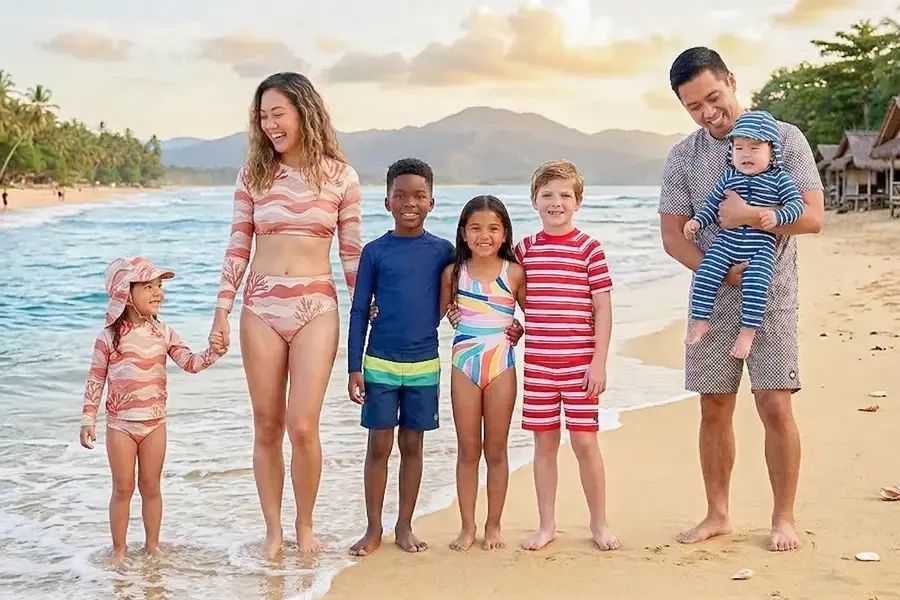
Your first collection should be focused, not sprawling. We recommend launching with 2–4 hero styles that represent your brand identity and serve your target customer’s primary needs.
For women’s swimwear brands, consider the most popular silhouettes: triangle bikinis, bandeau tops, high-waisted bottoms, one-piece suits, and tankinis. Each has different construction requirements and fabric consumption. For a complete visual reference, see our complete guide to types of women’s swimsuits.
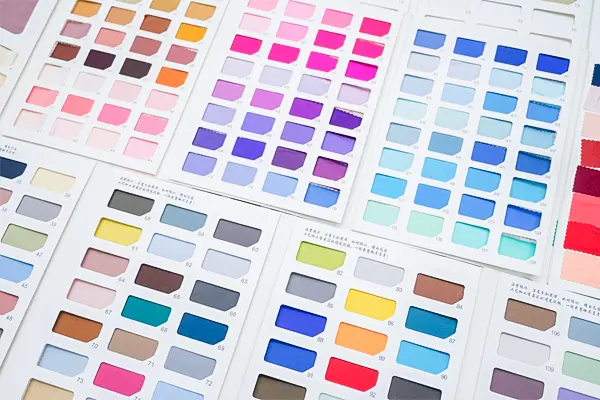
Fabric selection is equally critical. Swimwear fabric must have four-way stretch, chlorine resistance, UV protection (UPF 50+), and colorfastness. The most common options are nylon/spandex blends (soft hand feel, excellent stretch), polyester/spandex blends (better chlorine resistance, more affordable), and recycled options like REPREVE or ECONYL. For a deep dive into material options, read our swimwear fabric material guide.
Step 3: Choosing the Right Swimwear Manufacturer
Your manufacturer is the single most important partner in your business. The right factory will guide your product development, help you avoid costly mistakes, and scale with you as your brand grows. The wrong factory will deliver poor fit, missed deadlines, and quality issues that destroy your brand reputation.
When evaluating manufacturers, look for these criteria:
- Swimwear specialization: The factory should produce swimwear as its primary category, not as a side line
- In-house sampling: Ability to produce samples quickly (7–14 days) so you can iterate on fit and design
- Fabric sourcing capability: Access to certified performance fabrics (OEKO-TEX, REPREVE, ECONYL)
- Flexible MOQs: Willingness to work with new brands on smaller initial orders
- Quality control systems: In-line and final inspections with documented QC reports
- Communication: Responsive team with English-speaking merchandisers
For a complete evaluation framework, read our detailed guide on how to choose a swimwear manufacturer. You can also browse our list of the top 10 swimwear manufacturers for startups to compare capabilities and MOQs.
Recommended Manufacturing Partner
HW Fashion is a China-based swimwear manufacturer specializing in OEM, ODM, and private label production for emerging brands. With flexible MOQs starting from 50 pieces per style, in-house sampling (7-day turnaround), and certified fabric sourcing, HW Fashion supports brands from their first collection through scale. Their team handles everything from pattern making and fit samples to bulk production and quality inspection.
Step 4: Pricing and Revenue Strategy
Pricing your swimwear correctly from the start prevents margin erosion later. The standard approach:
- Calculate your landed cost: production cost + shipping + customs + packaging per unit
- Set your wholesale price: landed cost × 2.0–2.5
- Set your retail price: wholesale price × 2.0–2.2 (or landed cost × 4.0–5.5)
For example, if your landed cost per bikini set is $14, your wholesale price would be $28–$35, and your retail price would be $56–$77. Position within this range based on your brand positioning, target customer, and competitive landscape.
Avoid the common mistake of pricing too low to “be competitive.” Swimwear customers associate very low prices with poor quality and bad fit. It is better to position at a mid-to-premium price point and deliver genuine quality that justifies the price.
Step 5: Marketing and Customer Acquisition
Your marketing strategy should be built around where your target customer already spends time. For most DTC swimwear brands in 2026, the highest-impact channels are:
- Instagram and TikTok: Visual platforms where swimwear content performs exceptionally well. Invest in professional product photography and lifestyle content.
- Influencer seeding: Send product to 20–50 micro-influencers in your niche before launch. User-generated content from real bodies builds trust faster than studio photography.
- Email marketing: Build a waitlist before launch. Email converts at 3–5× the rate of social for e-commerce.
- Content marketing and SEO: Publish educational content that answers your customer’s questions (fabric guides, sizing guides, styling tips). This builds organic traffic over time.
Note that swimwear is distinct from general beachwear or resort wear. Understanding the difference between swimwear and beachwear helps you position your marketing messages correctly and avoid confusing your audience.
Step 6: Operations and Workflow
A typical swimwear production workflow from design to delivery follows this sequence:
- Week 1–2: Finalize designs, tech packs, and fabric selections
- Week 3–4: First sample (fit sample) received and reviewed
- Week 5–6: Revised sample (incorporating fit comments and adjustments)
- Week 7: Pre-production sample approved, bulk production begins
- Week 11–14: Bulk production completed, quality inspection conducted
- Week 15–16: Shipping and delivery (sea freight: 25–35 days; air freight: 5–7 days)
Plan your collection timeline backward from your target launch date. If you want to launch for summer (June–August in the Northern Hemisphere), production should start no later than February. For a detailed breakdown of the entire manufacturing process, see our OEM swimwear manufacturing process guide.
Step 7: Launch and Scaling Strategy
Launch with a focused strategy: small inventory, limited collection, and validated demand before scaling.
Pre-launch (4–6 weeks before):
- Build an email waitlist with a landing page
- Seed product to influencers for unboxing and review content
- Create behind-the-scenes content showing your design and production process
- Consider a pre-order campaign to validate demand before committing to full production
Scaling based on data:
- Identify your best-selling styles and colorways from season one
- Double down on winners—expand color options and size ranges for top performers
- Discontinue underperformers and replace with new styles based on customer feedback
- Increase order quantities gradually to improve unit economics
The biggest mistake new brands make is overproducing in season one. Growth must follow demand signals, not assumptions. Start lean, learn fast, and scale what works.
Frequently Asked Questions
What is the MOQ for swimwear manufacturing?
Traditional factories often require 300–1,000 pieces per style per color. However, startup-friendly manufacturers like HW Fashion offer flexible MOQs starting from 50–100 pieces per style, allowing new brands to test the market with lower financial risk. For a complete breakdown of how MOQs work and how to negotiate them, read our swimwear MOQ guide.
How long does it take to launch a swimwear brand?
From concept to first sale, plan for 3–5 months. This includes 2–4 weeks for design and tech pack development, 4–6 weeks for sampling and fit iterations, 4–8 weeks for bulk production, and 2–4 weeks for shipping and launch preparation. Fast-sampling manufacturers (7-day turnaround) can compress this timeline significantly.
How much does it cost to start a swimwear business?
Most first-time swimwear brand founders invest between $6,000 and $20,000 for their first collection. This covers sampling, production of 100–300 units, branding and packaging, e-commerce setup, and initial marketing. You can start at the lower end by working with manufacturers that offer low MOQs and by launching with a focused 2–3 style collection.
Can I start a swimwear brand without fashion experience?
Yes. Many successful swimwear founders come from non-fashion backgrounds. The key is partnering with an experienced swimwear manufacturer that provides development support—from pattern making and fabric sourcing to fit engineering and production management. Your role is to define the brand vision and target customer; your manufacturer’s role is to translate that vision into a producible, well-fitting product.
What fabric is best for swimwear?
The best swimwear fabric depends on your use case. Nylon/spandex (Lycra) blends offer the softest hand feel and best stretch—ideal for fashion bikinis and one-pieces. Polyester/spandex blends provide superior chlorine resistance and UV protection—better for performance and athletic swimwear. Recycled options like REPREVE and ECONYL deliver comparable performance with sustainability credentials. For a complete comparison, see our swimwear fabric material guide.
Conclusion

Starting a swimwear line is a real opportunity—but success depends on execution, not just ideas. Focus on these three foundations:
- Clear niche positioning: Know exactly who you are designing for and why your brand is different
- Strong product development: Invest in proper sampling, fit testing, and fabric selection before committing to bulk production
- Reliable manufacturing partner: Your manufacturer is not just a supplier—it is your production foundation. Choose one with swimwear specialization, flexible MOQs, and a track record of supporting emerging brands
If you want to launch efficiently and reduce early-stage risk, working with an experienced partner like HW Fashion can significantly improve your chances of success. From sampling to bulk production, our team supports new swimwear brands at every stage.
Start smart. Build lean. Scale based on real demand.